2026 Mid-Season Fisheries Update
August 7, 2026
By: Greg Taylor
As my regular readers know, I put a lot of effort into preparing my pre-season forecasts (guesses) for you. I take some pride in doing it well. And, I must say, I have done reasonably well over the decades. Nowhere near accurate, of course, but well enough to guide business decisions earlier in my career and now inform you. This season, I have had some major misses due to unexpectedly poor marine survival for key year classes and species: mainly four-year-old sockeye coastwide and some early-timed pink populations.
I previously spoke to the effects of the marine blob in the western Pacific that clearly impacted Russian and Japanese salmon returns in 2024 and 2025. But I thought, examining the sea surface temperatures across the Pacific, that the cooler waters in the eastern Pacific, and the negative PDO (Pacific Decadal Oscillation) would not only protect us, but improve productivity for our salmon. Traditionally, that is what would be expected. But it did not happen at least for some of our key commercial species. That alone is unsettling. Just a note, anything I am reporting occurred well before this year’s forecast ‘super’ El Niño.
Sockeye and many early-timed pink salmon that went to sea from southern Alaska down through B.C.’s central coast in 2024 were crushed by the lack of food, predators, or both.
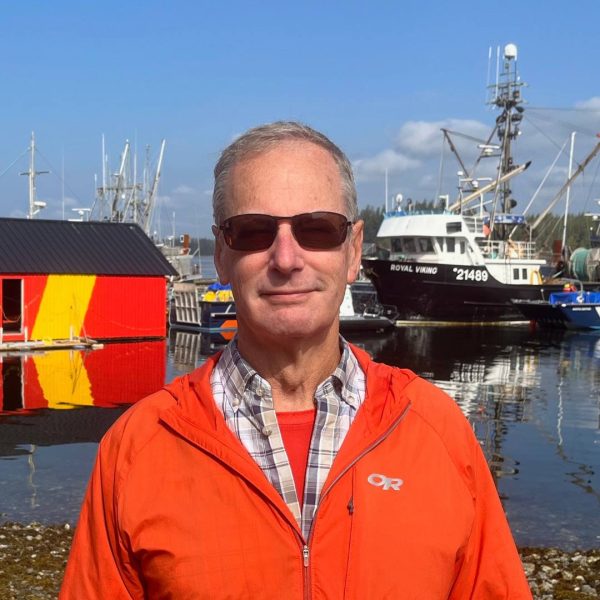
Fisheries Advisor Greg Taylor
The evidence is across the board. It can be seen in the failure of both hatchery and wild pink salmon returns in Prince William Sound (PWS). These hatcheries produce three-quarters of a billion juvenile pink salmon. This year, unless something unexpected happens in the next couple of weeks, 2026 will see one of the worst returns to PWS on record. A few hundred kilometres south of PWS, Southeast Alaskan pink returns have been very poor to date. When I say poor, I mean horrible. Although there is an indication that some of the later-timed streams are returning okay.
Area 3 (the coastal approaches to the Nass River) in northern B.C. was open only a couple of times for pink salmon before it was slammed shut because it was clear there were very few pinks to be caught. Although there are again rumours that some later-timed pinks may be showing. But the lack of DFO monitoring means that is what they will remain: rumours.
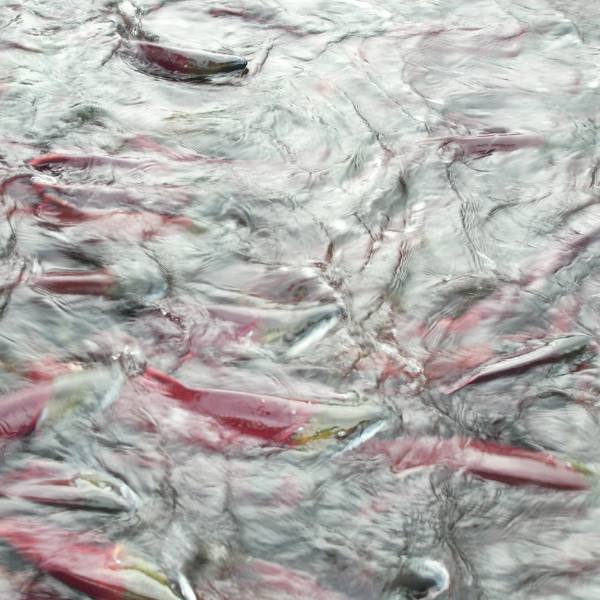
Skeena sockeye salmon
Area 6 (coastal approaches to Kitimat) never opened. Thank goodness, because when DFO finally allowed the monitor to begin his work (several weeks after when he would traditionally have begun), he found extraordinarily few pinks. I shudder to think of the impact if DFO had allowed an ‘exploratory’ fishery as they did in Area 3. DFO’s cutback in monitoring means we know little about what is happening in streams around Bella Bella. Again, fortunately, there were no ‘exploratory’ fisheries.
And, again, because of the dramatic cutbacks in monitoring, B.C. fishermen are unlikely to see any opportunities to fish pink systems with later timing as DFO managers simply do not have sufficient information to support fishing decisions.
Meanwhile, four-year-old sockeye are not returning near to what was forecast. Four-year-old sockeye spend two years rearing in the ocean having spent two years in freshwater. Therefore, they were at sea at the same time as pink salmon returning in 2026.
North Coast sockeye have multiple year classes: four-year-old, five-year-old, and even six-year-old. While four-year-old sockeye are typically the largest year class; many North Coast sockeye populations have significant proportions of five-year-old sockeye that appear to have avoided whatever happened in the North Pacific. This is an important ‘buffer’ most Fraser sockeye populations do not have. More on this later.
DFO mounted an aggressive fishery on the Skeena, with one commercial sector, or another, fishing most days of the week. Test fishing began very strong, indicating a sockeye return much larger than forecast. Most who pay attention knew that sockeye were returning early both in Alaska and B.C. and that there was a dearth of four-year-old sockeye. Why this is important is that five-year-old sockeye tend to return before four-year-old sockeye simply because they are larger. When migrating across hundreds, if not thousands, of miles, small differences multiply.
DFO-allocated fishing opportunities are based on estimates from a test fishery known to have a large margin of error. Within days, abundance estimates decreased and so did allocations. This pattern continued all season with DFO managing to abundance estimates that ended up being too high.
After DFO finally caught up with what was happening and closed the fishery, almost a week earlier than planned, much to the chagrin of many in industry who had not yet caught their allocations, it became clear that the fish estimated to have been available may not have been.
There are two ways sockeye abundance is estimated on the Skeena. The Tyee test fishery and the Babine fence. The Tyee test fishery multiplies the sockeye each day and expands it with a ‘multiplier’. This multiplier is based on the average of the past four years difference between Tyee estimates and final counts. But this year, the fish were very large both because they were five-year-olds and very healthy. I have not seen sockeye this size on the Skeena since… never. It was before my time. So, a multiplier based on years when sockeye were at least a pound smaller may have led to an overestimation. In other words, the Tyee test fishery is a best guess.
The Babine Fence, located where the Lake Babine Nation has been harvesting fish for at least 8,000 years, systematically counts the sockeye. It is an accurate accounting of escapement. As I write this, the 1.5 million sockeye estimated at Tyee have not turned up at the Babine fence as would be expected. Maybe they will. Maybe they are late. And maybe the fish estimated by Tyee were never there. We don’t know as of August 6th, but it is unsettling.
Because we have little knowledge of salmon distribution and ecology in the North Pacific—although the Pacific Salmon Foundation has done their best with limited funding—we have little idea of what happened to northern earlier timed pinks and four-year-old sockeye over the past two years, or when or where it happened.
But I can say that the five-year-old sockeye returning to the Skeena are extraordinarily fat and healthy. It is almost as if some pink salmon populations and four-year-old-sockeye passed through a ‘death zone’ as they migrated offshore before they got to where their brethren were thriving. The absence of competing pinks and four-year-old sockeye may have meant more food for those sockeye already there. This is pure conjecture.
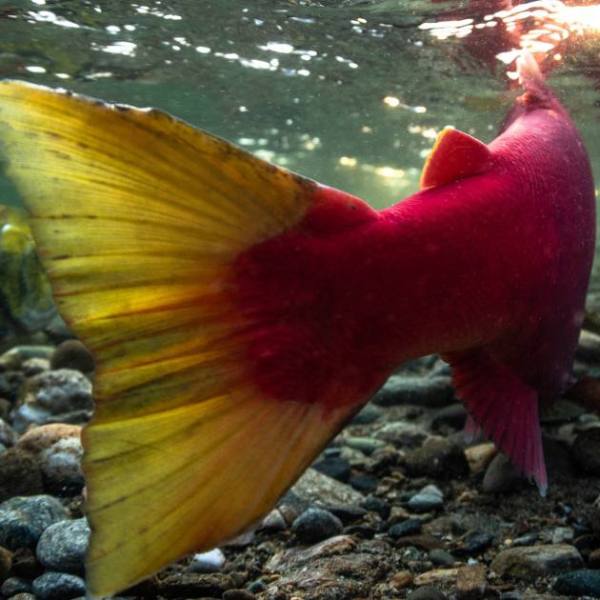
Sockeye Salmon. Tavish Campbell
Okay, most are asking, what does this mean for the dominant Fraser sockeye return so many have been anticipating this year? I don’t believe it means anything good. Fraser sockeye are almost entirely four-year-olds. It is the core reason that Fraser sockeye are cyclical, having dominant and sub-dominant years. If they suffer the same fate as northern four-year-old sockeye and some northern pink salmon populations appear to have, it doesn’t look good for them.
Unfortunately, current test fishing and returns appear to confirm this. The Early Stuart sockeye run timing group has been downgraded from its pre-season forecast of 63,000 to 46,000. The Early Summer run timing group has been downgraded from 1.163 million to 200,000 and marine First Nations food, social and ceremonial (FSC) fisheries closed. Test fishing for the Summer run, which was forecast to support large fisheries, is very poor. It is too early to say much about late timing sockeye including the famous Adams River sockeye. There is almost zero chance the large fishing opportunities many were anticipating, and desperately hoping for, after so many years of waiting, will now happen. But it is still too early to say, so hope remains alive.
The one bright spot has been Barkley Sound sockeye. It has seen a solid sockeye return and good fishing for recreational, gillnet, and seine fishermen. But it appears that the fishery is mainly supported by an unexpectedly strong five-year-old age class. It was forecast that four-year-olds would be the major component of the return, but this does not appear to be the case. Much like on the Skeena, five-year-old sockeye returning to the three lakes that comprise the Barkley Sound sockeye complex appear to be larger than average, very healthy, and are what supported fishing opportunities in 2026.
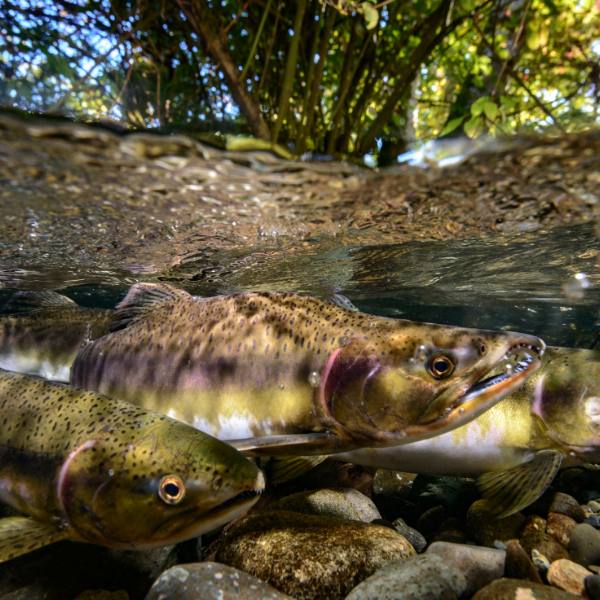
Pink Salmon. Eiko Jones
One thing the poor sockeye and pink returns in both Alaska and Russia (other than Bristol Bay sockeye in Alaska, which spend their early ocean-rearing period in the eastern Bering Sea, north of the Aleutian Islands, and have not experienced the same poor returns) are doing is driving up prices for wild salmon. Fishermen are receiving from $4.50 to $5.00 per pound. These are the highest sockeye prices I have seen since 1988.
The same for pink salmon. Prices will likely be high, but because processors control most of the vessels, licences, and marketing; ex-vessel pricing is more obscure.
So, what about the outliers? There are always outliers with salmon. Interestingly, Skeena River and South Coast pink salmon appear to be returning average to above average. But Skeena fish again appear to be infected with Henneguya, a parasite that affects the appearance and quality of salmon flesh. It poses no known human health risk, but compromises the fish’s market value. There is some limited interest from industry to open a fishery but there will be a lot of opposition from inland First Nations because of concerns for depressed sockeye populations that would be caught, and discarded, as bycatch.
It is still too early to say anything conclusive about the South Coast (other than for Fraser sockeye) except there appear to be lots of pinks showing in the mainland inlets and in East Coast Vancouver Island streams. I am hoping that Walcan Seafoods and their First Nations partners, see their investment in the Marine Stewardship Council certification of their terminal Quinsam pinks pay off. It was a risky and expensive move on their part.
This is an off year for Fraser pink salmon, so very few pinks are expected to return to the Fraser.
The other thing I got wrong is I anticipated Skeena steelhead would remain weak in 2026, but they are returning strong, despite almost continuous commercial, demonstration, and FSC fishing on the coast.
I have some hope, likely ill-placed, because I love Haida Gwaii and its salmon streams, that Masset Inlet might see some pink salmon as it is a later-timed pink population. But this is pure speculation based on nothing more than a hope and a prayer.
But one thing that is tangible is that I am seeing signs of chums almost everywhere. Chum salmon returns appear relatively strong on the North and Central Coasts. Even the Skeena, whose chum return has been severely depleted from decades of overfishing and habitat abuse, is seeing a decent return.
On the South Coast, although it is very, very early, there are chums showing up here and there. It is not surprising that chums, which spend four or more years in the marine environment, like five-year-old sockeye, may have avoided what crushed some northern pink and four-year-old sockeye returns.
North and Central Coast chums have also benefitted from limited fishing opportunities and effort in the areas of Alaska that intercept B.C. fish. This is one of the benefits of the poor pink numbers in Alaska. But the corollary is also true, when Alaskan pink and chum salmon numbers are strong, Alaskan managers fish hard in areas that intercept B.C. bound fish. As I have often reported, there are no significant Alaskan pink or chum streams on the outside of the panhandle. Alaska managers fully understand that it is an interception fishery and that they can catch fish returning to Alaskan streams in areas closer to those streams. Alaskan managers also understand it is a fishery that would be illegal under the Alaskan constitution if it were their fish. But because they are Canadian fish…
I also have some hope we may see some decent fishing opportunities for chum salmon on the South Coast this fall.
Meanwhile, as any South Coast recreational fisherman will tell you, the Salish Sea, and the rest of the South Coast is alive with both chinook and coho. Chinook and coho have a very different life history than pinks and chums, including occupying different regions of the eastern Pacific.
What unnerves me about DFO, and the recreational industries management of the recreational chinook and coho fishery is that it is an ‘open-access’ fishery with few controls. What we have seen happen to the sockeye and pink returns in 2026 will happen to South Coast chinook and coho. It has happened before and will happen again.
With the commercial fishery, DFO can simply close fisheries to protect poor returns. There is no similar mechanism to protect wild chinook and coho populations, especially in the face of the powerful recreational lobby. DFO marches in tune with their clients. In the South Coast it is the recreational lobby. On the North Coast it was industry.
In the meantime, please go out and buy some Ocean Wise-recommended Barkley Sound, Gitanyow or Babine Lake sockeye or MSC-certified Quinsam pink salmon. It may well be your last opportunity to buy legal, sustainably sourced sockeye in 2026 if things don’t turn around on the Fraser, and I know you wouldn’t buy salmon that does not come from legal fisheries or is sold by reputable retailers.
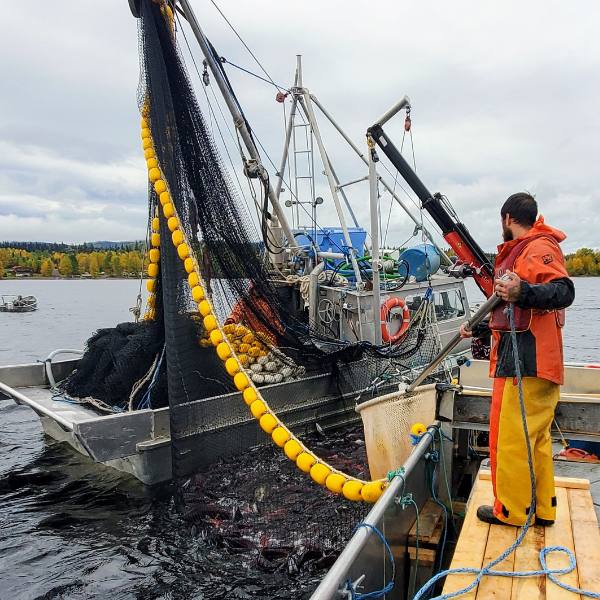
Talok Fisheries on Babine Lake
Share This Story!
2026 Mid-Season Fisheries Update
August 7, 2026
By: Greg Taylor
As my regular readers know, I put a lot of effort into preparing my pre-season forecasts (guesses) for you. I take some pride in doing it well. And, I must say, I have done reasonably well over the decades. Nowhere near accurate, of course, but well enough to guide business decisions earlier in my career and now inform you. This season, I have had some major misses due to unexpectedly poor marine survival for key year classes and species: mainly four-year-old sockeye coastwide and some early-timed pink populations.
I previously spoke to the effects of the marine blob in the western Pacific that clearly impacted Russian and Japanese salmon returns in 2024 and 2025. But I thought, examining the sea surface temperatures across the Pacific, that the cooler waters in the eastern Pacific, and the negative PDO (Pacific Decadal Oscillation) would not only protect us, but improve productivity for our salmon. Traditionally, that is what would be expected. But it did not happen at least for some of our key commercial species. That alone is unsettling. Just a note, anything I am reporting occurred well before this year’s forecast ‘super’ El Niño.
Sockeye and many early-timed pink salmon that went to sea from southern Alaska down through B.C.’s central coast in 2024 were crushed by the lack of food, predators, or both.
Fisheries Advisor Greg Taylor
The evidence is across the board. It can be seen in the failure of both hatchery and wild pink salmon returns in Prince William Sound (PWS). These hatcheries produce three-quarters of a billion juvenile pink salmon. This year, unless something unexpected happens in the next couple of weeks, 2026 will see one of the worst returns to PWS on record. A few hundred kilometres south of PWS, Southeast Alaskan pink returns have been very poor to date. When I say poor, I mean horrible. Although there is an indication that some of the later-timed streams are returning okay.
Area 3 (the coastal approaches to the Nass River) in northern B.C. was open only a couple of times for pink salmon before it was slammed shut because it was clear there were very few pinks to be caught. Although there are again rumours that some later-timed pinks may be showing. But the lack of DFO monitoring means that is what they will remain: rumours.
Skeena sockeye salmon
Area 6 (coastal approaches to Kitimat) never opened. Thank goodness, because when DFO finally allowed the monitor to begin his work (several weeks after when he would traditionally have begun), he found extraordinarily few pinks. I shudder to think of the impact if DFO had allowed an ‘exploratory’ fishery as they did in Area 3. DFO’s cutback in monitoring means we know little about what is happening in streams around Bella Bella. Again, fortunately, there were no ‘exploratory’ fisheries.
And, again, because of the dramatic cutbacks in monitoring, B.C. fishermen are unlikely to see any opportunities to fish pink systems with later timing as DFO managers simply do not have sufficient information to support fishing decisions.
Meanwhile, four-year-old sockeye are not returning near to what was forecast. Four-year-old sockeye spend two years rearing in the ocean having spent two years in freshwater. Therefore, they were at sea at the same time as pink salmon returning in 2026.
North Coast sockeye have multiple year classes: four-year-old, five-year-old, and even six-year-old. While four-year-old sockeye are typically the largest year class; many North Coast sockeye populations have significant proportions of five-year-old sockeye that appear to have avoided whatever happened in the North Pacific. This is an important ‘buffer’ most Fraser sockeye populations do not have. More on this later.
DFO mounted an aggressive fishery on the Skeena, with one commercial sector, or another, fishing most days of the week. Test fishing began very strong, indicating a sockeye return much larger than forecast. Most who pay attention knew that sockeye were returning early both in Alaska and B.C. and that there was a dearth of four-year-old sockeye. Why this is important is that five-year-old sockeye tend to return before four-year-old sockeye simply because they are larger. When migrating across hundreds, if not thousands, of miles, small differences multiply.
DFO-allocated fishing opportunities are based on estimates from a test fishery known to have a large margin of error. Within days, abundance estimates decreased and so did allocations. This pattern continued all season with DFO managing to abundance estimates that ended up being too high.
After DFO finally caught up with what was happening and closed the fishery, almost a week earlier than planned, much to the chagrin of many in industry who had not yet caught their allocations, it became clear that the fish estimated to have been available may not have been.
There are two ways sockeye abundance is estimated on the Skeena. The Tyee test fishery and the Babine fence. The Tyee test fishery multiplies the sockeye each day and expands it with a ‘multiplier’. This multiplier is based on the average of the past four years difference between Tyee estimates and final counts. But this year, the fish were very large both because they were five-year-olds and very healthy. I have not seen sockeye this size on the Skeena since… never. It was before my time. So, a multiplier based on years when sockeye were at least a pound smaller may have led to an overestimation. In other words, the Tyee test fishery is a best guess.
The Babine Fence, located where the Lake Babine Nation has been harvesting fish for at least 8,000 years, systematically counts the sockeye. It is an accurate accounting of escapement. As I write this, the 1.5 million sockeye estimated at Tyee have not turned up at the Babine fence as would be expected. Maybe they will. Maybe they are late. And maybe the fish estimated by Tyee were never there. We don’t know as of August 6th, but it is unsettling.
Because we have little knowledge of salmon distribution and ecology in the North Pacific—although the Pacific Salmon Foundation has done their best with limited funding—we have little idea of what happened to northern earlier timed pinks and four-year-old sockeye over the past two years, or when or where it happened.
But I can say that the five-year-old sockeye returning to the Skeena are extraordinarily fat and healthy. It is almost as if some pink salmon populations and four-year-old-sockeye passed through a ‘death zone’ as they migrated offshore before they got to where their brethren were thriving. The absence of competing pinks and four-year-old sockeye may have meant more food for those sockeye already there. This is pure conjecture.
Sockeye Salmon. Tavish Campbell
Okay, most are asking, what does this mean for the dominant Fraser sockeye return so many have been anticipating this year? I don’t believe it means anything good. Fraser sockeye are almost entirely four-year-olds. It is the core reason that Fraser sockeye are cyclical, having dominant and sub-dominant years. If they suffer the same fate as northern four-year-old sockeye and some northern pink salmon populations appear to have, it doesn’t look good for them.
Unfortunately, current test fishing and returns appear to confirm this. The Early Stuart sockeye run timing group has been downgraded from its pre-season forecast of 63,000 to 46,000. The Early Summer run timing group has been downgraded from 1.163 million to 200,000 and marine First Nations food, social and ceremonial (FSC) fisheries closed. Test fishing for the Summer run, which was forecast to support large fisheries, is very poor. It is too early to say much about late timing sockeye including the famous Adams River sockeye. There is almost zero chance the large fishing opportunities many were anticipating, and desperately hoping for, after so many years of waiting, will now happen. But it is still too early to say, so hope remains alive.
The one bright spot has been Barkley Sound sockeye. It has seen a solid sockeye return and good fishing for recreational, gillnet, and seine fishermen. But it appears that the fishery is mainly supported by an unexpectedly strong five-year-old age class. It was forecast that four-year-olds would be the major component of the return, but this does not appear to be the case. Much like on the Skeena, five-year-old sockeye returning to the three lakes that comprise the Barkley Sound sockeye complex appear to be larger than average, very healthy, and are what supported fishing opportunities in 2026.
Pink Salmon. Eiko Jones
One thing the poor sockeye and pink returns in both Alaska and Russia (other than Bristol Bay sockeye in Alaska, which spend their early ocean-rearing period in the eastern Bering Sea, north of the Aleutian Islands, and have not experienced the same poor returns) are doing is driving up prices for wild salmon. Fishermen are receiving from $4.50 to $5.00 per pound. These are the highest sockeye prices I have seen since 1988.
The same for pink salmon. Prices will likely be high, but because processors control most of the vessels, licences, and marketing; ex-vessel pricing is more obscure.
So, what about the outliers? There are always outliers with salmon. Interestingly, Skeena River and South Coast pink salmon appear to be returning average to above average. But Skeena fish again appear to be infected with Henneguya, a parasite that affects the appearance and quality of salmon flesh. It poses no known human health risk, but compromises the fish’s market value. There is some limited interest from industry to open a fishery but there will be a lot of opposition from inland First Nations because of concerns for depressed sockeye populations that would be caught, and discarded, as bycatch.
It is still too early to say anything conclusive about the South Coast (other than for Fraser sockeye) except there appear to be lots of pinks showing in the mainland inlets and in East Coast Vancouver Island streams. I am hoping that Walcan Seafoods and their First Nations partners, see their investment in the Marine Stewardship Council certification of their terminal Quinsam pinks pay off. It was a risky and expensive move on their part.
This is an off year for Fraser pink salmon, so very few pinks are expected to return to the Fraser.
The other thing I got wrong is I anticipated Skeena steelhead would remain weak in 2026, but they are returning strong, despite almost continuous commercial, demonstration, and FSC fishing on the coast.
I have some hope, likely ill-placed, because I love Haida Gwaii and its salmon streams, that Masset Inlet might see some pink salmon as it is a later-timed pink population. But this is pure speculation based on nothing more than a hope and a prayer.
But one thing that is tangible is that I am seeing signs of chums almost everywhere. Chum salmon returns appear relatively strong on the North and Central Coasts. Even the Skeena, whose chum return has been severely depleted from decades of overfishing and habitat abuse, is seeing a decent return.
On the South Coast, although it is very, very early, there are chums showing up here and there. It is not surprising that chums, which spend four or more years in the marine environment, like five-year-old sockeye, may have avoided what crushed some northern pink and four-year-old sockeye returns.
North and Central Coast chums have also benefitted from limited fishing opportunities and effort in the areas of Alaska that intercept B.C. fish. This is one of the benefits of the poor pink numbers in Alaska. But the corollary is also true, when Alaskan pink and chum salmon numbers are strong, Alaskan managers fish hard in areas that intercept B.C. bound fish. As I have often reported, there are no significant Alaskan pink or chum streams on the outside of the panhandle. Alaska managers fully understand that it is an interception fishery and that they can catch fish returning to Alaskan streams in areas closer to those streams. Alaskan managers also understand it is a fishery that would be illegal under the Alaskan constitution if it were their fish. But because they are Canadian fish…
I also have some hope we may see some decent fishing opportunities for chum salmon on the South Coast this fall.
Meanwhile, as any South Coast recreational fisherman will tell you, the Salish Sea, and the rest of the South Coast is alive with both chinook and coho. Chinook and coho have a very different life history than pinks and chums, including occupying different regions of the eastern Pacific.
What unnerves me about DFO, and the recreational industries management of the recreational chinook and coho fishery is that it is an ‘open-access’ fishery with few controls. What we have seen happen to the sockeye and pink returns in 2026 will happen to South Coast chinook and coho. It has happened before and will happen again.
With the commercial fishery, DFO can simply close fisheries to protect poor returns. There is no similar mechanism to protect wild chinook and coho populations, especially in the face of the powerful recreational lobby. DFO marches in tune with their clients. In the South Coast it is the recreational lobby. On the North Coast it was industry.
In the meantime, please go out and buy some Ocean Wise-recommended Barkley Sound, Gitanyow or Babine Lake sockeye or MSC-certified Quinsam pink salmon. It may well be your last opportunity to buy legal, sustainably sourced sockeye in 2026 if things don’t turn around on the Fraser, and I know you wouldn’t buy salmon that does not come from legal fisheries or is sold by reputable retailers.
Talok Fisheries on Babine Lake