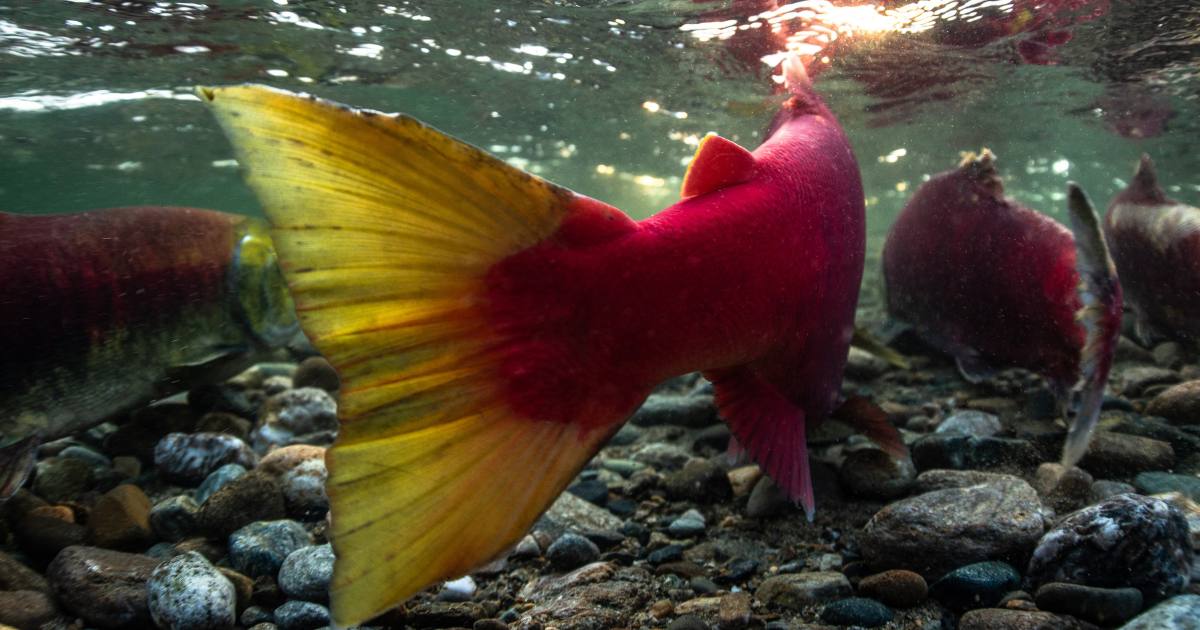
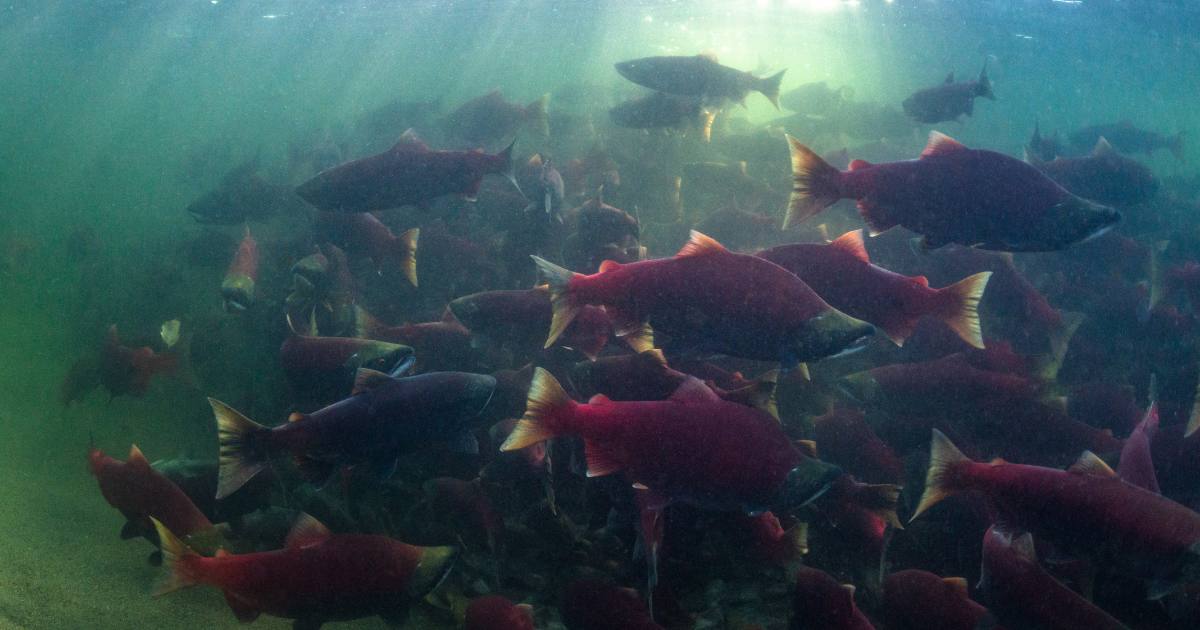
The federal government says this year’s budget will “Build Canada Strong.”
Yet there’s nothing strong about weakening supports for the natural systems that keep our communities safe and fed. Our rivers, watersheds, and wild salmon are part of Canada’s backbone, but this budget doesn’t treat them that way.
We know the fiscal climate is tight. But instead of shoring up the programs that protect our freshwater and wild salmon, Ottawa’s move to “streamline” amounts to deep cuts to the very protections we rely on. And at the same time, federal departments are being pushed to fast-track infrastructure and resource projects at a pace that risks short-circuiting environmental oversight and causing long-term damage to salmon populations and their habitats.
When budgets get tighter, our natural wealth shouldn’t be what gets sacrificed. Read the top five lowlights from the 2025 Federal Budget.
1️⃣ DFO Cuts Threaten Salmon Science and Oversight
Budget 2025 directs Fisheries and Oceans Canada (DFO) to cut up to 15 per cent of its spending, including reductions to research, monitoring, and compliance. That could mean significant total cuts to safeguarding our natural wealth over the next five years
DFO says it will “modernize” fisheries management using artificial intelligence and digital tools. While efficiency sounds promising, AI can’t replace people in the creeks counting fish or assessing habitat. On-the-ground stock assessment for wild salmon is already at an all-time low, and further cuts could lead to overfishing and unnecessary fishery closures.
The department also plans to allow “self-assessment” for small, “low-risk” projects, like culverts and drains, by providing standardized guidance to project proponents. But poorly designed or undersized culverts are already blocking thousands of kilometres of salmon habitat. Without oversight, this shift could lead to more disconnected habitat and corner-cutting that could also weaken communities’ flood security.
A small consolation, if you can call it that, is the possibility of fewer junk science sea lice reports. The real harm, though, is clear: the same cuts will undermine the credible science needed to protect wild salmon.
If DFO is truly committed to transitioning away from open-net-pen fish farms, it should start by trimming its aquaculture division, which has long blurred the line between regulator and promoter of the industry.
2️⃣ The Pacific Salmon Strategy Initiative quietly slips away (and with it, the Salmon Restoration and Innovation Fund.)
Launched in 2021 with $647 million, the Pacific Salmon Strategy Initiative (PSSI) was billed as a historic commitment to rebuild wild salmon. It supported habitat restoration, stock assessment, Indigenous stewardship, and stronger monitoring across B.C.
Now, as the initiative heads into its final months, Budget 2025 makes no mention of it.
The initiative was far from perfect and had its critics, including us, but it still represented a major federal focus on salmon recovery. Within it, the B.C. Salmon Restoration and Innovation Fund (BC SRIF) stood out as a bright spot, funding many on-the-ground restoration and monitoring projects that improved salmon habitat and supported local jobs. In the government’s election platform, they committed to an increase in BC SRIF funding, and have appeared to walk back on this.
Without a replacement for PSSI and SRIF, the federal government is effectively walking away from one of its most significant salmon recovery efforts in decades.
3️⃣ Watersheds, Water, and the Canada Water Agency supports evaporate
Two years after its launch, the Canada Water Agency, the federal hub meant to lead national freshwater management, faces its first round of funding cuts. While small on paper, these reductions signal a troubling shift away from long-term investment in freshwater security. Instead of scaling up to meet Canada’s growing drought and flood risks, the agency is being asked to tighten its belt.
The government has also gone silent on its earlier promise to create a $100 million Water Security Technology Fund. The fund, which we were concerned might miss the mark, was to support research, innovation, and data tools for watershed resilience. Though announced as part of the Party’s platform, it’s nowhere to be found in Budget 2025.
These changes signal that Canada’s freshwater leadership may be losing momentum, which is disappointing, but creates space for us to push for renewed commitments with better direction.
We are happy to see the government’s continued commitment to ending long-term boil water advisories in First Nations communities. It’s an essential investment in public health, but progress remains slow.
4️⃣ Canada’s Flood Plan: More Notifications, Fewer Solutions
In the years following the devastating November 2021 flood events, we hoped to see some significant progress made to help upgrade aging flood infrastructure and support natural defences that help safeguard people and wild salmon.
Instead, Budget 2025 funds a new public alert system ($55M), and earmarks $40 million over two years (starting in 2026-27) to create a Youth Climate Corps to train young Canadians to respond to climate emergencies and support recovery.
So yes, warnings might come faster, and there might be extra help with cleanup, but the risks will keep rising, infrastructure will keep failing, and communities will keep paying.
There are a few bright spots. Planned federal infrastructure investments total $115.2 billion over five years, though it’s unclear how much of this money could support improving flood defences or watershed security. Crown–Indigenous Relations and Northern Affairs Canada will also receive funding for flood mapping on reserve lands. It’s an important step towards protecting some of the communities that are the most at risk from floods.
5️⃣ Fish and Fish Habitat Protection Program: renewed, but potentially weaker
Budget 2025 includes $84 million over three years to renew the Fish and Fish Habitat Protection Program. This program is the section of DFO that reviews projects and enforces habitat safeguards under the Fisheries Act.
That’s a change from Budget 2023, which outlined $120.5 million over five years. While the per-year funding is slightly higher now (about $28M per year versus $24M), inflation and DFO’s departmental cuts could mean the program still loses ground.
And with the department moving toward self-assessment for “low-risk” works, fewer DFO officers will review real projects. That means less accountability and greater potential for destruction or disconnection of critical salmon habitat.
The bottom line
Budget 2025 calls itself a plan to “Build Canada Strong.” But it steps back when we should be stepping up. Canada can’t “streamline” its way to strength. We have to invest in ourselves, which includes the natural wealth that sustains wild salmon and us.
Share This Story!
The federal government says this year’s budget will “Build Canada Strong.”
Yet there’s nothing strong about weakening supports for the natural systems that keep our communities safe and fed. Our rivers, watersheds, and wild salmon are part of Canada’s backbone, but this budget doesn’t treat them that way.
We know the fiscal climate is tight. But instead of shoring up the programs that protect our freshwater and wild salmon, Ottawa’s move to “streamline” amounts to deep cuts to the very protections we rely on. And at the same time, federal departments are being pushed to fast-track infrastructure and resource projects at a pace that risks short-circuiting environmental oversight and causing long-term damage to salmon populations and their habitats.
When budgets get tighter, our natural wealth shouldn’t be what gets sacrificed. Read the top five lowlights from the 2025 Federal Budget.
1️⃣ DFO Cuts Threaten Salmon Science and Oversight
Budget 2025 directs Fisheries and Oceans Canada (DFO) to cut up to 15 per cent of its spending, including reductions to research, monitoring, and compliance. That could mean significant total cuts to safeguarding our natural wealth over the next five years
DFO says it will “modernize” fisheries management using artificial intelligence and digital tools. While efficiency sounds promising, AI can’t replace people in the creeks counting fish or assessing habitat. On-the-ground stock assessment for wild salmon is already at an all-time low, and further cuts could lead to overfishing and unnecessary fishery closures.
The department also plans to allow “self-assessment” for small, “low-risk” projects, like culverts and drains, by providing standardized guidance to project proponents. But poorly designed or undersized culverts are already blocking thousands of kilometres of salmon habitat. Without oversight, this shift could lead to more disconnected habitat and corner-cutting that could also weaken communities’ flood security.
A small consolation, if you can call it that, is the possibility of fewer junk science sea lice reports. The real harm, though, is clear: the same cuts will undermine the credible science needed to protect wild salmon.
If DFO is truly committed to transitioning away from open-net-pen fish farms, it should start by trimming its aquaculture division, which has long blurred the line between regulator and promoter of the industry.
2️⃣ The Pacific Salmon Strategy Initiative quietly slips away (and with it, the Salmon Restoration and Innovation Fund.)
Launched in 2021 with $647 million, the Pacific Salmon Strategy Initiative (PSSI) was billed as a historic commitment to rebuild wild salmon. It supported habitat restoration, stock assessment, Indigenous stewardship, and stronger monitoring across B.C.
Now, as the initiative heads into its final months, Budget 2025 makes no mention of it.
The initiative was far from perfect and had its critics, including us, but it still represented a major federal focus on salmon recovery. Within it, the B.C. Salmon Restoration and Innovation Fund (BC SRIF) stood out as a bright spot, funding many on-the-ground restoration and monitoring projects that improved salmon habitat and supported local jobs. In the government’s election platform, they committed to an increase in BC SRIF funding, and have appeared to walk back on this.
Without a replacement for PSSI and SRIF, the federal government is effectively walking away from one of its most significant salmon recovery efforts in decades.
3️⃣ Watersheds, Water, and the Canada Water Agency supports evaporate
Two years after its launch, the Canada Water Agency, the federal hub meant to lead national freshwater management, faces its first round of funding cuts. While small on paper, these reductions signal a troubling shift away from long-term investment in freshwater security. Instead of scaling up to meet Canada’s growing drought and flood risks, the agency is being asked to tighten its belt.
The government has also gone silent on its earlier promise to create a $100 million Water Security Technology Fund. The fund, which we were concerned might miss the mark, was to support research, innovation, and data tools for watershed resilience. Though announced as part of the Party’s platform, it’s nowhere to be found in Budget 2025.
These changes signal that Canada’s freshwater leadership may be losing momentum, which is disappointing, but creates space for us to push for renewed commitments with better direction.
We are happy to see the government’s continued commitment to ending long-term boil water advisories in First Nations communities. It’s an essential investment in public health, but progress remains slow.
4️⃣ Canada’s Flood Plan: More Notifications, Fewer Solutions
In the years following the devastating November 2021 flood events, we hoped to see some significant progress made to help upgrade aging flood infrastructure and support natural defences that help safeguard people and wild salmon.
Instead, Budget 2025 funds a new public alert system ($55M), and earmarks $40 million over two years (starting in 2026-27) to create a Youth Climate Corps to train young Canadians to respond to climate emergencies and support recovery.
So yes, warnings might come faster, and there might be extra help with cleanup, but the risks will keep rising, infrastructure will keep failing, and communities will keep paying.
There are a few bright spots. Planned federal infrastructure investments total $115.2 billion over five years, though it’s unclear how much of this money could support improving flood defences or watershed security. Crown–Indigenous Relations and Northern Affairs Canada will also receive funding for flood mapping on reserve lands. It’s an important step towards protecting some of the communities that are the most at risk from floods.
5️⃣ Fish and Fish Habitat Protection Program: renewed, but potentially weaker
Budget 2025 includes $84 million over three years to renew the Fish and Fish Habitat Protection Program. This program is the section of DFO that reviews projects and enforces habitat safeguards under the Fisheries Act.
That’s a change from Budget 2023, which outlined $120.5 million over five years. While the per-year funding is slightly higher now (about $28M per year versus $24M), inflation and DFO’s departmental cuts could mean the program still loses ground.
And with the department moving toward self-assessment for “low-risk” works, fewer DFO officers will review real projects. That means less accountability and greater potential for destruction or disconnection of critical salmon habitat.
The bottom line
Budget 2025 calls itself a plan to “Build Canada Strong.” But it steps back when we should be stepping up. Canada can’t “streamline” its way to strength. We have to invest in ourselves, which includes the natural wealth that sustains wild salmon and us.
Share This Story!
The federal government says this year’s budget will “Build Canada Strong.”
Yet there’s nothing strong about weakening supports for the natural systems that keep our communities safe and fed. Our rivers, watersheds, and wild salmon are part of Canada’s backbone, but this budget doesn’t treat them that way.
We know the fiscal climate is tight. But instead of shoring up the programs that protect our freshwater and wild salmon, Ottawa’s move to “streamline” amounts to deep cuts to the very protections we rely on. And at the same time, federal departments are being pushed to fast-track infrastructure and resource projects at a pace that risks short-circuiting environmental oversight and causing long-term damage to salmon populations and their habitats.
When budgets get tighter, our natural wealth shouldn’t be what gets sacrificed. Read the top five lowlights from the 2025 Federal Budget.
1️⃣ DFO Cuts Threaten Salmon Science and Oversight
Budget 2025 directs Fisheries and Oceans Canada (DFO) to cut up to 15 per cent of its spending, including reductions to research, monitoring, and compliance. That could mean significant total cuts to safeguarding our natural wealth over the next five years
DFO says it will “modernize” fisheries management using artificial intelligence and digital tools. While efficiency sounds promising, AI can’t replace people in the creeks counting fish or assessing habitat. On-the-ground stock assessment for wild salmon is already at an all-time low, and further cuts could lead to overfishing and unnecessary fishery closures.
The department also plans to allow “self-assessment” for small, “low-risk” projects, like culverts and drains, by providing standardized guidance to project proponents. But poorly designed or undersized culverts are already blocking thousands of kilometres of salmon habitat. Without oversight, this shift could lead to more disconnected habitat and corner-cutting that could also weaken communities’ flood security.
A small consolation, if you can call it that, is the possibility of fewer junk science sea lice reports. The real harm, though, is clear: the same cuts will undermine the credible science needed to protect wild salmon.
If DFO is truly committed to transitioning away from open-net-pen fish farms, it should start by trimming its aquaculture division, which has long blurred the line between regulator and promoter of the industry.
2️⃣ The Pacific Salmon Strategy Initiative quietly slips away (and with it, the Salmon Restoration and Innovation Fund.)
Launched in 2021 with $647 million, the Pacific Salmon Strategy Initiative (PSSI) was billed as a historic commitment to rebuild wild salmon. It supported habitat restoration, stock assessment, Indigenous stewardship, and stronger monitoring across B.C.
Now, as the initiative heads into its final months, Budget 2025 makes no mention of it.
The initiative was far from perfect and had its critics, including us, but it still represented a major federal focus on salmon recovery. Within it, the B.C. Salmon Restoration and Innovation Fund (BC SRIF) stood out as a bright spot, funding many on-the-ground restoration and monitoring projects that improved salmon habitat and supported local jobs. In the government’s election platform, they committed to an increase in BC SRIF funding, and have appeared to walk back on this.
Without a replacement for PSSI and SRIF, the federal government is effectively walking away from one of its most significant salmon recovery efforts in decades.
3️⃣ Watersheds, Water, and the Canada Water Agency supports evaporate
Two years after its launch, the Canada Water Agency, the federal hub meant to lead national freshwater management, faces its first round of funding cuts. While small on paper, these reductions signal a troubling shift away from long-term investment in freshwater security. Instead of scaling up to meet Canada’s growing drought and flood risks, the agency is being asked to tighten its belt.
The government has also gone silent on its earlier promise to create a $100 million Water Security Technology Fund. The fund, which we were concerned might miss the mark, was to support research, innovation, and data tools for watershed resilience. Though announced as part of the Party’s platform, it’s nowhere to be found in Budget 2025.
These changes signal that Canada’s freshwater leadership may be losing momentum, which is disappointing, but creates space for us to push for renewed commitments with better direction.
We are happy to see the government’s continued commitment to ending long-term boil water advisories in First Nations communities. It’s an essential investment in public health, but progress remains slow.
4️⃣ Canada’s Flood Plan: More Notifications, Fewer Solutions
In the years following the devastating November 2021 flood events, we hoped to see some significant progress made to help upgrade aging flood infrastructure and support natural defences that help safeguard people and wild salmon.
Instead, Budget 2025 funds a new public alert system ($55M), and earmarks $40 million over two years (starting in 2026-27) to create a Youth Climate Corps to train young Canadians to respond to climate emergencies and support recovery.
So yes, warnings might come faster, and there might be extra help with cleanup, but the risks will keep rising, infrastructure will keep failing, and communities will keep paying.
There are a few bright spots. Planned federal infrastructure investments total $115.2 billion over five years, though it’s unclear how much of this money could support improving flood defences or watershed security. Crown–Indigenous Relations and Northern Affairs Canada will also receive funding for flood mapping on reserve lands. It’s an important step towards protecting some of the communities that are the most at risk from floods.
5️⃣ Fish and Fish Habitat Protection Program: renewed, but potentially weaker
Budget 2025 includes $84 million over three years to renew the Fish and Fish Habitat Protection Program. This program is the section of DFO that reviews projects and enforces habitat safeguards under the Fisheries Act.
That’s a change from Budget 2023, which outlined $120.5 million over five years. While the per-year funding is slightly higher now (about $28M per year versus $24M), inflation and DFO’s departmental cuts could mean the program still loses ground.
And with the department moving toward self-assessment for “low-risk” works, fewer DFO officers will review real projects. That means less accountability and greater potential for destruction or disconnection of critical salmon habitat.
The bottom line
Budget 2025 calls itself a plan to “Build Canada Strong.” But it steps back when we should be stepping up. Canada can’t “streamline” its way to strength. We have to invest in ourselves, which includes the natural wealth that sustains wild salmon and us.
Share This Story!