Should Industry Be Allowed to Expand Without Paying Their Fair Share for Freshwater?
Provincial and federal governments are moving quickly to stimulate the economy. Major industrial projects and resource operations are being pushed forward on faster timelines, often with the potential for reduced environmental oversight. These include gas pipelines that will be fed by increased fracking, and new mines, both of which will see vast amounts of freshwater permanently polluted with toxic heavy metals and other chemicals.
Growth is expected, but as B.C. accelerates development, we need to do everything we can do to protect the freshwater that every salmon stream, local farm, and community depends on.
If governments are helping industry fast-track their operations, they must do the same and modernize industrial water rates that have remained frozen in time and unchanged for over a decade, and reinvest in our watersheds to ensure our freshwater sources are safeguarded.

Watershed Watch’s Meghan Rooney
Industry Pays a Maximum of $2.25 for a Million Litres of Freshwater
A recent report from the BC Watershed Security Coalition shows that our province has some of the lowest industrial water rental rates in Canada. Large industrial users, including mining operations, oil and gas, and commercial water bottling plants, still pay a maximum of $2.25 for every million litres of water they withdraw (and pollute). To put that in perspective, $2.25 buys enough freshwater to fill more than 6,600 bathtubs.
Monitoring of water use remains limited and is not publicly accessible. As more industrial activity moves forward, the amount of freshwater required will only increase, yet industry continues to access huge volumes, paying less than the cost of a pint of beer for every million litres.
Development Shouldn’t Come at the Expense of Wild Salmon
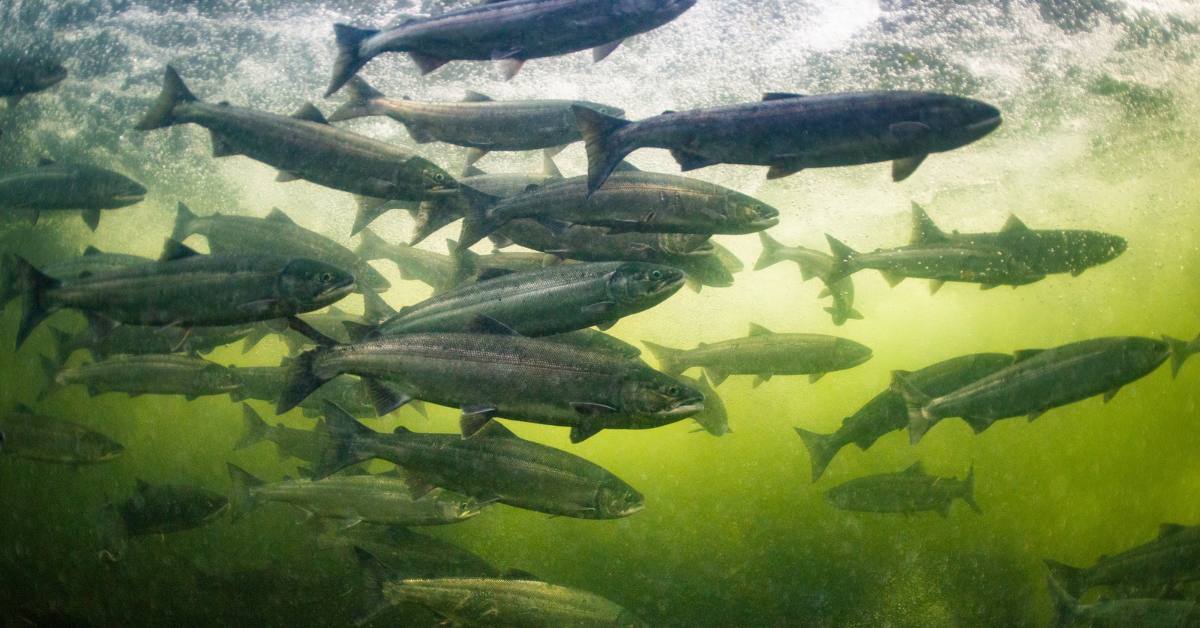
When development outpaces watershed planning, the consequences show up first in the places salmon depend on. Increased land disturbance, vegetation removal, warmer tributaries, altered flow patterns, and changes to water quality all reduce the ability of salmon to survive and return to spawn. These effects compound existing pressures on already vulnerable runs, and they undermine the recovery work that communities and First Nations have been fighting for.

Healthy Watershed Funding Is Falling Behind
B.C. has shown before what meaningful investment can accomplish. The 27 million dollar Healthy Watersheds Initiative restored damaged streams, supported Indigenous Guardian programs, and created stewardship jobs that strengthened local defences against flood and drought. The Watershed Security Fund has helped advance community-led monitoring, science, and regional planning that protect salmon habitat and drinking water sources.
But year-to-year funding for watershed security has significantly decreased. While many communities and First Nations have shovel-ready projects that could make a real difference, the funding gap means they cannot move forward.
Industrial Water Rates Need to Reflect Today’s Realities
Updating industrial water rental rates is not about punishing industry. It is about responsible planning in a period of rapid development, and making sure the industries that rely on B.C.’s freshwater are contributing fairly to its protection. It means they pay a fair rate for the privilege to use our most precious resource.
Fair, modernized rates could provide stable funding to strengthen watershed and salmon monitoring, restore degraded streams and wetlands, rebuild natural defences against future drought, wildfires and floods, support the creation of local watershed boards that empower communities to take part in water decision-making, and ensure new development does not undermine long-term watershed security. These solutions are practical, evidence-based, and urgently needed, but they require sustained, reliable funding to take root.

Watershed Watch and the Watershed Security Coalition Are Sounding the Alarm
Watershed Watch Salmon Society is a proud member of the Watershed Security Coalition, which includes local governments, non-profits, farmers, fishers, and water experts from across the province. Together, we are calling on the province to make a fair increase to industrial water rental rates and for all revenue from those rate increases to be reinvested directly into watershed security. The goal is simple: support wild salmon recovery, strengthen watershed health, bolster natural defences against flooding, drought and wildfire, and give local communities a say in managing their freshwater sources, at a time when it’s needed most.
Our Work Through CodeBlue BC
Through the CodeBlue BC campaign, Watershed Watch is giving British Columbians a clear and accessible way to speak up about this issue. Hundreds of people have already contacted their MLA this month to call for modernized industrial water rates and investments in watershed security.
Our Most Precious Resource
B.C.’s future prosperity depends on healthy watersheds, abundant wild salmon runs, and an abundance of fresh water. None of these is guaranteed if our fresh water continues to be undervalued and underpriced.

Share This Story!
Should Industry Be Allowed to Expand Without Paying Their Fair Share for Freshwater?
Provincial and federal governments are moving quickly to stimulate the economy. Major industrial projects and resource operations are being pushed forward on faster timelines, often with the potential for reduced environmental oversight. These include gas pipelines that will be fed by increased fracking, and new mines, both of which will see vast amounts of freshwater permanently polluted with toxic heavy metals and other chemicals.
Growth is expected, but as B.C. accelerates development, we need to do everything we can do to protect the freshwater that every salmon stream, local farm, and community depends on.
If governments are helping industry fast-track their operations, they must do the same and modernize industrial water rates that have remained frozen in time and unchanged for over a decade, and reinvest in our watersheds to ensure our freshwater sources are safeguarded.
Watershed Watch’s Meghan Rooney
Industry Pays a Maximum of $2.25 for a Million Litres of Freshwater
A recent report from the BC Watershed Security Coalition shows that our province has some of the lowest industrial water rental rates in Canada. Large industrial users, including mining operations, oil and gas, and commercial water bottling plants, still pay a maximum of $2.25 for every million litres of water they withdraw (and pollute). To put that in perspective, $2.25 buys enough freshwater to fill more than 6,600 bathtubs.
Monitoring of water use remains limited and is not publicly accessible. As more industrial activity moves forward, the amount of freshwater required will only increase, yet industry continues to access huge volumes, paying less than the cost of a pint of beer for every million litres.
Development Shouldn’t Come at the Expense of Wild Salmon
When development outpaces watershed planning, the consequences show up first in the places salmon depend on. Increased land disturbance, vegetation removal, warmer tributaries, altered flow patterns, and changes to water quality all reduce the ability of salmon to survive and return to spawn. These effects compound existing pressures on already vulnerable runs, and they undermine the recovery work that communities and First Nations have been fighting for.
Healthy Watershed Funding Is Falling Behind
B.C. has shown before what meaningful investment can accomplish. The 27 million dollar Healthy Watersheds Initiative restored damaged streams, supported Indigenous Guardian programs, and created stewardship jobs that strengthened local defences against flood and drought. The Watershed Security Fund has helped advance community-led monitoring, science, and regional planning that protect salmon habitat and drinking water sources.
But year-to-year funding for watershed security has significantly decreased. While many communities and First Nations have shovel-ready projects that could make a real difference, the funding gap means they cannot move forward.
Industrial Water Rates Need to Reflect Today’s Realities
Updating industrial water rental rates is not about punishing industry. It is about responsible planning in a period of rapid development, and making sure the industries that rely on B.C.’s freshwater are contributing fairly to its protection. It means they pay a fair rate for the privilege to use our most precious resource.
Fair, modernized rates could provide stable funding to strengthen watershed and salmon monitoring, restore degraded streams and wetlands, rebuild natural defences against future drought, wildfires and floods, support the creation of local watershed boards that empower communities to take part in water decision-making, and ensure new development does not undermine long-term watershed security. These solutions are practical, evidence-based, and urgently needed, but they require sustained, reliable funding to take root.
Watershed Watch and the Watershed Security Coalition Are Sounding the Alarm
Watershed Watch Salmon Society is a proud member of the Watershed Security Coalition, which includes local governments, non-profits, farmers, fishers, and water experts from across the province. Together, we are calling on the province to make a fair increase to industrial water rental rates and for all revenue from those rate increases to be reinvested directly into watershed security. The goal is simple: support wild salmon recovery, strengthen watershed health, bolster natural defences against flooding, drought and wildfire, and give local communities a say in managing their freshwater sources, at a time when it’s needed most.
Our Work Through CodeBlue BC
Through the CodeBlue BC campaign, Watershed Watch is giving British Columbians a clear and accessible way to speak up about this issue. Hundreds of people have already contacted their MLA this month to call for modernized industrial water rates and investments in watershed security.
Our Most Precious Resource
B.C.’s future prosperity depends on healthy watersheds, abundant wild salmon runs, and an abundance of fresh water. None of these is guaranteed if our fresh water continues to be undervalued and underpriced.
Share This Story!
Should Industry Be Allowed to Expand Without Paying Their Fair Share for Freshwater?
Provincial and federal governments are moving quickly to stimulate the economy. Major industrial projects and resource operations are being pushed forward on faster timelines, often with the potential for reduced environmental oversight. These include gas pipelines that will be fed by increased fracking, and new mines, both of which will see vast amounts of freshwater permanently polluted with toxic heavy metals and other chemicals.
Growth is expected, but as B.C. accelerates development, we need to do everything we can do to protect the freshwater that every salmon stream, local farm, and community depends on.
If governments are helping industry fast-track their operations, they must do the same and modernize industrial water rates that have remained frozen in time and unchanged for over a decade, and reinvest in our watersheds to ensure our freshwater sources are safeguarded.
Watershed Watch’s Meghan Rooney
Industry Pays a Maximum of $2.25 for a Million Litres of Freshwater
A recent report from the BC Watershed Security Coalition shows that our province has some of the lowest industrial water rental rates in Canada. Large industrial users, including mining operations, oil and gas, and commercial water bottling plants, still pay a maximum of $2.25 for every million litres of water they withdraw (and pollute). To put that in perspective, $2.25 buys enough freshwater to fill more than 6,600 bathtubs.
Monitoring of water use remains limited and is not publicly accessible. As more industrial activity moves forward, the amount of freshwater required will only increase, yet industry continues to access huge volumes, paying less than the cost of a pint of beer for every million litres.
Development Shouldn’t Come at the Expense of Wild Salmon
When development outpaces watershed planning, the consequences show up first in the places salmon depend on. Increased land disturbance, vegetation removal, warmer tributaries, altered flow patterns, and changes to water quality all reduce the ability of salmon to survive and return to spawn. These effects compound existing pressures on already vulnerable runs, and they undermine the recovery work that communities and First Nations have been fighting for.
Healthy Watershed Funding Is Falling Behind
B.C. has shown before what meaningful investment can accomplish. The 27 million dollar Healthy Watersheds Initiative restored damaged streams, supported Indigenous Guardian programs, and created stewardship jobs that strengthened local defences against flood and drought. The Watershed Security Fund has helped advance community-led monitoring, science, and regional planning that protect salmon habitat and drinking water sources.
But year-to-year funding for watershed security has significantly decreased. While many communities and First Nations have shovel-ready projects that could make a real difference, the funding gap means they cannot move forward.
Industrial Water Rates Need to Reflect Today’s Realities
Updating industrial water rental rates is not about punishing industry. It is about responsible planning in a period of rapid development, and making sure the industries that rely on B.C.’s freshwater are contributing fairly to its protection. It means they pay a fair rate for the privilege to use our most precious resource.
Fair, modernized rates could provide stable funding to strengthen watershed and salmon monitoring, restore degraded streams and wetlands, rebuild natural defences against future drought, wildfires and floods, support the creation of local watershed boards that empower communities to take part in water decision-making, and ensure new development does not undermine long-term watershed security. These solutions are practical, evidence-based, and urgently needed, but they require sustained, reliable funding to take root.
Watershed Watch and the Watershed Security Coalition Are Sounding the Alarm
Watershed Watch Salmon Society is a proud member of the Watershed Security Coalition, which includes local governments, non-profits, farmers, fishers, and water experts from across the province. Together, we are calling on the province to make a fair increase to industrial water rental rates and for all revenue from those rate increases to be reinvested directly into watershed security. The goal is simple: support wild salmon recovery, strengthen watershed health, bolster natural defences against flooding, drought and wildfire, and give local communities a say in managing their freshwater sources, at a time when it’s needed most.
Our Work Through CodeBlue BC
Through the CodeBlue BC campaign, Watershed Watch is giving British Columbians a clear and accessible way to speak up about this issue. Hundreds of people have already contacted their MLA this month to call for modernized industrial water rates and investments in watershed security.
Our Most Precious Resource
B.C.’s future prosperity depends on healthy watersheds, abundant wild salmon runs, and an abundance of fresh water. None of these is guaranteed if our fresh water continues to be undervalued and underpriced.
Share This Story!