
Progress has been made since the destruction at Worth Creek first came to light. But the story is far from over, and salmon still need real restoration.
In December 2024, journalist and conservation advocate Jack Emberly first reported that Worth Creek, connected to Norrish Creek just east of Mission, B.C., had gone completely dry.
Hundreds of dead chum and coho salmon lay stranded on dry gravel. Fertilized eggs were lost.
The scale of loss at Worth Creek is difficult to overstate.
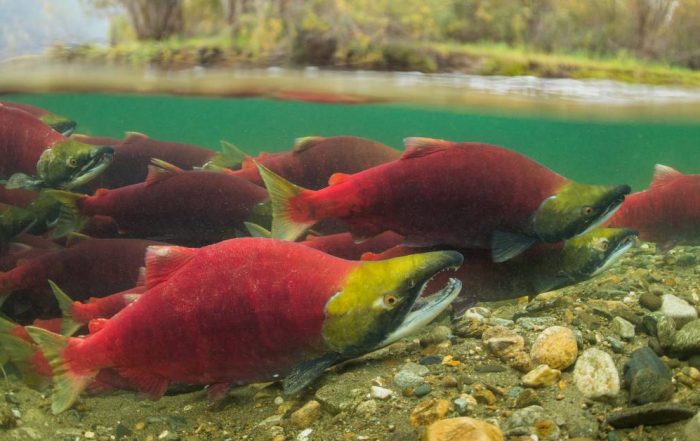
Former DFO enhancement officer Matt Foy recalls Worth Creek supporting more than 7,000 chum and 500 coho spawners in a single season during the 1980s.
The most recent count recorded just 167 chum and two coho.

Habitats Program Director Lina Azeez.
“This is as ugly a gravel removal impact as I have seen in my 45 years in the business,” Foy said.
For a small creek, Worth Creek played an outsized role for salmon. Fed by groundwater flowing from nearby Norrish Creek, it provided stable, cool water conditions ideal for spawning and egg incubation. Along with nearby streams like Railroad, Hawkins, Barnes, and Inch Creeks, the system historically supported around 20,000 spawning salmon annually.

Worth Creek went dry following gravel extraction at Norrish Creek.
Something had gone seriously wrong.
Subsequent investigations by the Norrish Creek Gravel Stewardship Group (NCGSG), fisheries biologists, and community experts identified the likely cause: industrial-scale gravel extraction by Canadian Pacific Kansas City Rail had lowered parts of the Norrish Creek streambed by several metres, disrupting the groundwater flows that once fed Worth Creek and nearby salmon streams.
Without enough water flowing through the underground gravel pathways connecting the system, Worth Creek dried up.
Win #1: Gravel Extraction Was Halted
After months of advocacy by Watershed Watch, the BC Wildlife Federation, the NCGSG, and legal pressure from Ecojustice, Fisheries and Oceans Canada (DFO) finally acted.
In June 2025, DFO rescinded the 2021 authorization that had allowed gravel extraction in the area. The department issued a stop-work order under the Fisheries Act and committed CPKC to developing a restoration plan.
CPKC Rail also confirmed it would not remove gravel during the 2025 season.
That was a significant victory, made possible because people spoke up.
Nearly 1,000 Watershed Watch supporters sent emails calling for action to halt the destruction and defend these salmon streams.
The Warning Signs Were There
Documents later obtained through Freedom of Information requests by the NCGSG revealed that DFO staff had been raising alarms internally for years.
In 2022, officers documented sections of Norrish Creek running dry as water drained into deep extraction pits created by gravel mining.
By December 2024, officers again reported Worth Creek completely dry, blocking salmon access to spawning habitat.
The warning signs were there but action came far too late.

Deep pools were created in Norrish Creek as a result of gravel mining.
Win #2: Early Restoration Begun, But Serious Problems Remain
Last fall, CPKC carried out an initial restoration attempt by building two pilot channels intended to reconnect water flow to Worth Creek.
But by February 2026, one of those channels had already filled with sand, smothering salmon redds created only months earlier.
Fisheries biologist John Werring described the work bluntly in a recent article by Emberly, “It’s a bloody joke — a make-you-feel-good project.”
Without major intervention to stabilize the creek system and rebuild the streambed, the erosion and habitat degradation will likely continue.

An aerial image of the restoration attempt by CPKC Rail in September 2025.
Salmon Still Need Real Restoration
There are more meaningful restoration options on the table.
In January 2026, DFO and the NCGSG discussed practical measures that could help restore the river system and reconnect groundwater flows. Proposed measures included:
- Filling in deep extraction pits that continue drawing water away from salmon streams
- Lowering berms so water can move more naturally across the floodplain
- Placing large boulders in-stream to slow flows, reduce erosion, improve groundwater recharge, and create better salmon habitat
These are the kinds of larger-scale actions that could begin restoring the natural hydrology the watershed once relied on.
But so far, there is still no credible, binding restoration plan in place.
The Fight Is Not Over
What happened at Worth Creek is more than a local issue.
It is a warning about how vulnerable groundwater-fed salmon streams can be when industrial activities alter river systems without fully understanding the consequences.
Stopping further gravel extraction was an important first step. But salmon will not recover without long-term restoration, monitoring, and public accountability.
Watershed Watch will continue closely monitoring the situation, supporting community groups and independent experts, and pushing DFO and CPKC Rail toward full habitat remediation.
Thank you to everyone who has spoken up, shared this story, and helped keep attention on Norrish Creek and Worth Creek.
And special thanks again to Jack Emberly, whose reporting helps keep this story alive.

An aerial image of gravel piles near Norrish Creek.
Share This Story!
Norrish Creek Update: Salmon Still Need Real Restoration
May 26, 2026
By: Lina Azeez
Progress has been made since the destruction at Worth Creek first came to light. But the story is far from over, and salmon still need real restoration.
In December 2024, journalist and conservation advocate Jack Emberly first reported that Worth Creek, connected to Norrish Creek just east of Mission, B.C., had gone completely dry.
Hundreds of dead chum and coho salmon lay stranded on dry gravel. Fertilized eggs were lost.
The scale of loss at Worth Creek is difficult to overstate.
Former DFO enhancement officer Matt Foy recalls Worth Creek supporting more than 7,000 chum and 500 coho spawners in a single season during the 1980s.
The most recent count recorded just 167 chum and two coho.
Habitats Program Director Lina Azeez.
“This is as ugly a gravel removal impact as I have seen in my 45 years in the business,” Foy said.
For a small creek, Worth Creek played an outsized role for salmon. Fed by groundwater flowing from nearby Norrish Creek, it provided stable, cool water conditions ideal for spawning and egg incubation. Along with nearby streams like Railroad, Hawkins, Barnes, and Inch Creeks, the system historically supported around 20,000 spawning salmon annually.
Worth Creek went dry following gravel extraction at Norrish Creek.
Something had gone seriously wrong.
Subsequent investigations by the Norrish Creek Gravel Stewardship Group (NCGSG), fisheries biologists, and community experts identified the likely cause: industrial-scale gravel extraction by Canadian Pacific Kansas City Rail had lowered parts of the Norrish Creek streambed by several metres, disrupting the groundwater flows that once fed Worth Creek and nearby salmon streams.
Without enough water flowing through the underground gravel pathways connecting the system, Worth Creek dried up.
Win #1: Gravel Extraction Was Halted
After months of advocacy by Watershed Watch, the BC Wildlife Federation, the NCGSG, and legal pressure from Ecojustice, Fisheries and Oceans Canada (DFO) finally acted.
In June 2025, DFO rescinded the 2021 authorization that had allowed gravel extraction in the area. The department issued a stop-work order under the Fisheries Act and committed CPKC to developing a restoration plan.
CPKC Rail also confirmed it would not remove gravel during the 2025 season.
That was a significant victory, made possible because people spoke up.
Nearly 1,000 Watershed Watch supporters sent emails calling for action to halt the destruction and defend these salmon streams.
The Warning Signs Were There
Documents later obtained through Freedom of Information requests by the NCGSG revealed that DFO staff had been raising alarms internally for years.
In 2022, officers documented sections of Norrish Creek running dry as water drained into deep extraction pits created by gravel mining.
By December 2024, officers again reported Worth Creek completely dry, blocking salmon access to spawning habitat.
The warning signs were there but action came far too late.
Deep pools were created in Norrish Creek as a result of gravel mining.
Win #2: Early Restoration Begun, But Serious Problems Remain
Last fall, CPKC carried out an initial restoration attempt by building two pilot channels intended to reconnect water flow to Worth Creek.
But by February 2026, one of those channels had already filled with sand, smothering salmon redds created only months earlier.
Fisheries biologist John Werring described the work bluntly in a recent article by Emberly, “It’s a bloody joke — a make-you-feel-good project.”
Without major intervention to stabilize the creek system and rebuild the streambed, the erosion and habitat degradation will likely continue.
An aerial image of the restoration attempt by CPKC Rail in September 2025.
Salmon Still Need Real Restoration
There are more meaningful restoration options on the table.
In January 2026, DFO and the NCGSG discussed practical measures that could help restore the river system and reconnect groundwater flows. Proposed measures included:
- Filling in deep extraction pits that continue drawing water away from salmon streams
- Lowering berms so water can move more naturally across the floodplain
- Placing large boulders in-stream to slow flows, reduce erosion, improve groundwater recharge, and create better salmon habitat
These are the kinds of larger-scale actions that could begin restoring the natural hydrology the watershed once relied on.
But so far, there is still no credible, binding restoration plan in place.
The Fight Is Not Over
What happened at Worth Creek is more than a local issue.
It is a warning about how vulnerable groundwater-fed salmon streams can be when industrial activities alter river systems without fully understanding the consequences.
Stopping further gravel extraction was an important first step. But salmon will not recover without long-term restoration, monitoring, and public accountability.
Watershed Watch will continue closely monitoring the situation, supporting community groups and independent experts, and pushing DFO and CPKC Rail toward full habitat remediation.
Thank you to everyone who has spoken up, shared this story, and helped keep attention on Norrish Creek and Worth Creek.
And special thanks again to Jack Emberly, whose reporting helps keep this story alive.
An aerial image of gravel piles near Norrish Creek.


how can we continue to help? I’m a frequent regular at the creek and want to give back to Nature how it provides to us. what’s the best thing civilians can do to keep fighting for the full restoration of the creek?