
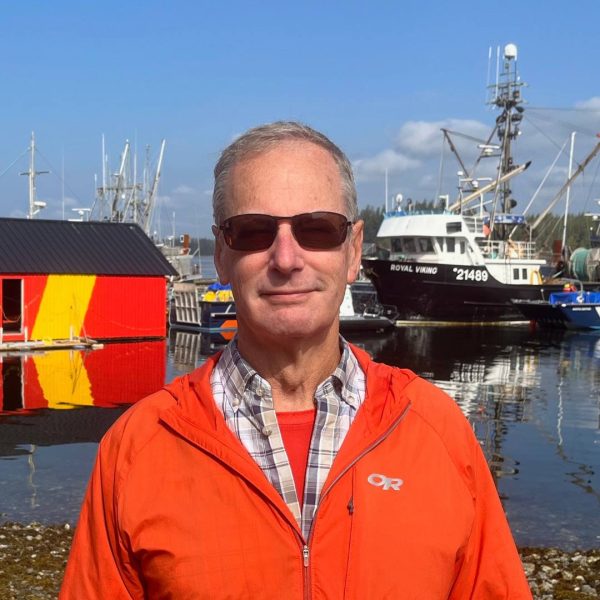
Each week, Watershed Watch’s fisheries advisor Greg Taylor will share his expert insights on what’s happening in B.C.’s salmon fisheries. With decades of experience in the industry, Greg offers a blend of observations, analysis, and personal perspective.
I mentioned in the last update that I would provide a list of the salmon from B.C. fisheries recommended by OceanWise. They are:
- North Coast Troll: chinook, coho, and pink salmon
- Gitanyow sockeye (caught in Meziadin River and Lake by dipnet and seine)
- Talok (Lake Babine Nation) sockeye salmon (caught in Babine Lake by seine, trap, and beach seine)
- Area 3 pink salmon identified as being caught in First Nation’s Seine Demonstration Fisheries. Other seine caught pink salmon do not qualify as they do not have verifiable monitoring of their catch
- Barkley Sound sockeye and chinook salmon caught by gillnet and seine
- Barkley Sound chinook and coho salmon caught by trap
- Nitinat Lake chum salmon caught by gillnet and seine
- Chehalis River chum salmon caught by traps
The reader might ask why the 140,000 sockeye, 1.4 million pinks, and 236,000 chum salmon retained by gillnets and seines in North Coast fisheries so far this year are not recommended by OceanWise, or any other credible certifier of sustainably caught salmon.
The two reasons are: first, the key tool DFO uses to conserve salmon stocks and species of concern caught in these fisheries is to require that they be discarded with the least possible harm. However, DFO and industry refuse to introduce independent monitoring of discards to verify what is discarded and whether those fish are likely to survive and successfully spawn. Any credible certification body cannot, therefore, recommend this catch. The second reason is the monitoring, evaluation, and assessment of B.C. salmon is inconsistent with accepted international best practices criteria and standards for a sustainable fishery. Industry could easily address the first reason. They choose not to do so. The second is more of a challenge as DFO would have to make it a priority to manage and assess B.C. salmon in a manner that meets the standards set out by the Marine Stewardship Council (MSC). Note that Alaska and many Russian fisheries are MSC certified, so it is not a particularly high bar.
Bristol Bay Sockeye
Bristol Bay is now over. Current harvest exceeds 40 million. This is about 4 million more than forecast.
Copper River Sockeye
The Copper River sockeye fishery will end up harvesting around a million sockeye, slightly more than its recent 5-year average.
Prince William Sound Pinks
After a disastrous season in 2024, it appears that PWS will, at a minimum, achieve its forecast harvest of about 60 million pink salmon, and based on current trends, may well exceed the 2025 forecast.
Chum Salmon
Chum salmon are returning strong throughout Alaska. And, as is usually the case with chums, we are seeing the same trend throughout their range, including here in B.C. Chums spend four years in the Pacific, and good environmental conditions tend to benefit most chum populations.
Southeast Alaska
Calling this one is more challenging. It is over a third of the way through the Southeast Alaska pink salmon season. Both test fishing and inside catches suggest a poor pink return relative to the forecast. But I can recall a few years when I sat in my office completely deflated by the poor SE pink catches in July, only to have the season turn around in August.
The poor fishing in SE Alaska was curtailing harvest pressure on B.C.-bound populations. This, and marine water temperatures which are funnelling pinks and chums straight into Dixon Entrance, thus avoiding Alaskan interceptions, was helping make this a banner year for B.C. fishermen on the north coast.
But last week, SE Alaskan fishermen in District 104 (outside portions of the SE Alaska panhandle where there are limited pink or chum producing systems) had a big week. In response, the Alaska Department of Fish and Game has opened District 104 for two consecutive days. Interceptions of B.C. sockeye, pinks, chum, coho, and chinook will jump.
Northern B.C. – Area 3 (Portland Canal and the Nass River) Salmon
Nass River sockeye is tracking below average, as are Nass chinook. The Gitanyow, whose territories lie in the upper Nass, have not been able to catch the sockeye they need for food, never mind their commercial allocation. Chinook are worse. Chinook are unlikely to meet their escapement goal. Consider this in context of what you will read further down in terms of discards in the marine commercial fishery.
Fishing for pinks in Area 3 north of Prince Rupert has been excellent, with most seine boats being able to load themselves within one or, at most, two days. There are only around 15 or 16 seine boats fishing the entire north coast.
Seines must discard all chum, coho, chinook, and steelhead. DFO dictates that the fish must be ‘released with the least possible harm,’ encouraging you to think that the fish are carefully released in a manner that achieves a high probability of them surviving to spawn.
Research details how seiners should be operated to ensure the highest possible survival of chums discarded in the fishery: sets kept small and managed so as not to crowd the fish, remove the fish from the net within 15 minutes, sort them on deck, and ensure bycatch is carefully returned to the water within 2 minutes.
None of the above is required of North Coast fishermen.
Hence, it must be assumed that chum bycatch discarded in this fishery will experience high mortality.
Don’t get me wrong, I have always believed a seine boat that adheres to the above operating requirements is just a mobile fish trap in that they can harvest the target species while successfully releasing bycatch in a manner that maximizes their chances of successfully spawning. It is the best alternative to sustainably harvest a target species in a mixed stock environment, but if DFO and industry refuse to implement the necessary measures, it is indefensible to argue this is a sustainably managed fishery.
Industry argues that it is too expensive to monitor the fishery using at-sea observers. Today, most fisheries around the world employ cameras to do this work. Cameras are inexpensive, effective, and easily deployed.
Lack of monitoring and an inability to access discard mortality are key reasons why B.C. fisheries are unable to secure a sustainability designation from any of the major domestic or international certification organizations.
You would be correct to question whether 11 boats can have much impact. The answer is that seines fish known salmon migratory pathways at times of the tide that will maximize harvest. They move from point to point to achieve this, meaning there are often line-ups of boats waiting to set. Hence, there is not a linear relationship between the number of seines operating and catch.
Northern B.C. – Skeena Salmon
This is what I said last week, “In terms of Skeena sockeye, I have gone from high expectations, to hoping, to praying, to begging the fish Gods. The return will clearly exceed the aggregate escapement goal, but is not tracking to come anywhere close to its 2.7 million pre-season prediction. However, there is still time for things to turn around.”
But I never expected this: on Wednesday evening this week, DFO announced that they had been using incorrect calculations to calculate the escapement of Skeena salmon. The result is that the return is much larger than what they have been reporting.
This is ‘sort of’ good news. Yes, there is more sockeye available. But it also means that there will be significant pressure to fish harder on the back side of the return when the proportion of sockeye stocks of concern is much higher.
Upriver First Nations are arguing that there is no need to increase the pressure on these sockeye populations of concern, and that they can harvest all the available catch in terminal areas, avoiding these conservation concerns.
The current run size is around 1.9 million, compared to the 2.7 million forecast. We are clearly on the back side of the Skeena sockeye return, so it is unlikely that the marine sector will be able to harvest its share. This should allow for a significant demonstration and Excess Salmon to Spawning Requirement fisheries in Babine Lake. The size of the sockeye in 2025 is less than it was in 2024, as it appears the proportion of smaller 4-year-old sockeye is larger.
Skeena pink escapements are double what they were in the brood year. This is a problem for processors because a high proportion of Skeena pinks are infected with the Henneguya parasite. This parasite is harmless to humans but is unsightly. In the old days, when most pinks were canned, this was not a problem, as the cooking process destroyed the parasite.
Now that there are no canneries left on the north coast, all pinks are frozen. Buyers are not keen to purchase pinks infected with the parasite. Processors will likely do what they can to limit catching the abundant Skeena pinks when trying to harvest their Skeena sockeye quota.
It is also too early to say much about any of the other species. There is a good showing of early steelhead, which is encouraging for recreational fishermen.
I am pleased to see better chinook returns to the Skeena than we have seen in recent years. The return is still much less than it was in its banner years. They may also be benefiting from this year’s recreational closures.
Marine charter fishermen are reporting a tougher year for coho.
Area 6 Pink Salmon
There are reports that early pink salmon were abundant in Area 6. The first seine opening was July 24th. It appears as if the pink salmon had moved out of the open fishing area and into the inlets by the time the fishery opened. We have to wait to see if the later (outside) timed pink salmon arrive in any strength.
It will be interesting to see if Areas 7 and 8 see better pink and chum returns this year.
Somass (Barkley Sound) Sockeye
The Barkley Sound commercial sockeye fishery is likely over for 2025. The later part of the return was not as strong as expected, leaving most gear groups over their allowable catch at the current run size estimate.
Fraser Sockeye
Oh boy, hold onto your hats.
Early Stuart sockeye are now expected to return at 7X their 2025 median forecast! This is an extraordinarily exciting event, but not entirely unexpected to long-term observers of Fraser sockeye. Early Stuart sockeye have, throughout their existence, often been reduced to very small numbers due to in-river migration blockages. It proves once again that if we give salmon the opportunity, they can recover.
Early-summer sockeye are tracking above their 50p (median) forecast: possibly well above. The summer run timing group is also beginning to show in strength. This run timing group is likely to be well above its 50p forecast. Even some late-run sockeye are showing up in test fisheries.
Commercial fishers are beginning to watch returns with some anticipation. There is not much of a commercial opportunity at the 50p level for summer run sockeye. But if the run comes in at the 75p, or above, there will be opportunities. It will be interesting to watch.
Fraser water levels are 36 per cent below average, and temperatures are 1.3 per cent above average (19.5 degrees as of July 28th, as opposed to the average of 18.2: lower Fraser). In some tributaries, temperatures are approaching temperatures that can be lethal for salmon. Recent research indicates that in-river survival decreases rapidly when water temperatures exceed 15 degrees. (Atlas et al, 2021)
Fraser River Chinook
All I can say at this time is that there are encouraging signs we may be seeing some improvement in some endangered Fraser chinook populations (summer 5-2s) in 2025. The more abundant Fraser 4-1 chinook salmon are beginning to show in strength.
South Coast Pinks
Test fishing in Johnstone Straits is indicating a high number of pink salmon are migrating through the straits.
Greg will be providing weekly fisheries updates, which we will publish here on Fridays. Stay tuned.
Share This Story!
Each week, Watershed Watch’s fisheries advisor Greg Taylor will share his expert insights on what’s happening in B.C.’s salmon fisheries. With decades of experience in the industry, Greg offers a blend of observations, analysis, and personal perspective.
I mentioned in the last update that I would provide a list of the salmon from B.C. fisheries recommended by OceanWise. They are:
- North Coast Troll: chinook, coho, and pink salmon
- Gitanyow sockeye (caught in Meziadin River and Lake by dipnet and seine)
- Talok (Lake Babine Nation) sockeye salmon (caught in Babine Lake by seine, trap, and beach seine)
- Area 3 pink salmon identified as being caught in First Nation’s Seine Demonstration Fisheries. Other seine caught pink salmon do not qualify as they do not have verifiable monitoring of their catch
- Barkley Sound sockeye and chinook salmon caught by gillnet and seine
- Barkley Sound chinook and coho salmon caught by trap
- Nitinat Lake chum salmon caught by gillnet and seine
- Chehalis River chum salmon caught by traps
The reader might ask why the 140,000 sockeye, 1.4 million pinks, and 236,000 chum salmon retained by gillnets and seines in North Coast fisheries so far this year are not recommended by OceanWise, or any other credible certifier of sustainably caught salmon.
The two reasons are: first, the key tool DFO uses to conserve salmon stocks and species of concern caught in these fisheries is to require that they be discarded with the least possible harm. However, DFO and industry refuse to introduce independent monitoring of discards to verify what is discarded and whether those fish are likely to survive and successfully spawn. Any credible certification body cannot, therefore, recommend this catch. The second reason is the monitoring, evaluation, and assessment of B.C. salmon is inconsistent with accepted international best practices criteria and standards for a sustainable fishery. Industry could easily address the first reason. They choose not to do so. The second is more of a challenge as DFO would have to make it a priority to manage and assess B.C. salmon in a manner that meets the standards set out by the Marine Stewardship Council (MSC). Note that Alaska and many Russian fisheries are MSC certified, so it is not a particularly high bar.
Bristol Bay Sockeye
Bristol Bay is now over. Current harvest exceeds 40 million. This is about 4 million more than forecast.
Copper River Sockeye
The Copper River sockeye fishery will end up harvesting around a million sockeye, slightly more than its recent 5-year average.
Prince William Sound Pinks
After a disastrous season in 2024, it appears that PWS will, at a minimum, achieve its forecast harvest of about 60 million pink salmon, and based on current trends, may well exceed the 2025 forecast.
Chum Salmon
Chum salmon are returning strong throughout Alaska. And, as is usually the case with chums, we are seeing the same trend throughout their range, including here in B.C. Chums spend four years in the Pacific, and good environmental conditions tend to benefit most chum populations.
Southeast Alaska
Calling this one is more challenging. It is over a third of the way through the Southeast Alaska pink salmon season. Both test fishing and inside catches suggest a poor pink return relative to the forecast. But I can recall a few years when I sat in my office completely deflated by the poor SE pink catches in July, only to have the season turn around in August.
The poor fishing in SE Alaska was curtailing harvest pressure on B.C.-bound populations. This, and marine water temperatures which are funnelling pinks and chums straight into Dixon Entrance, thus avoiding Alaskan interceptions, was helping make this a banner year for B.C. fishermen on the north coast.
But last week, SE Alaskan fishermen in District 104 (outside portions of the SE Alaska panhandle where there are limited pink or chum producing systems) had a big week. In response, the Alaska Department of Fish and Game has opened District 104 for two consecutive days. Interceptions of B.C. sockeye, pinks, chum, coho, and chinook will jump.
Northern B.C. – Area 3 (Portland Canal and the Nass River) Salmon
Nass River sockeye is tracking below average, as are Nass chinook. The Gitanyow, whose territories lie in the upper Nass, have not been able to catch the sockeye they need for food, never mind their commercial allocation. Chinook are worse. Chinook are unlikely to meet their escapement goal. Consider this in context of what you will read further down in terms of discards in the marine commercial fishery.
Fishing for pinks in Area 3 north of Prince Rupert has been excellent, with most seine boats being able to load themselves within one or, at most, two days. There are only around 15 or 16 seine boats fishing the entire north coast.
Seines must discard all chum, coho, chinook, and steelhead. DFO dictates that the fish must be ‘released with the least possible harm,’ encouraging you to think that the fish are carefully released in a manner that achieves a high probability of them surviving to spawn.
Research details how seiners should be operated to ensure the highest possible survival of chums discarded in the fishery: sets kept small and managed so as not to crowd the fish, remove the fish from the net within 15 minutes, sort them on deck, and ensure bycatch is carefully returned to the water within 2 minutes.
None of the above is required of North Coast fishermen.
Hence, it must be assumed that chum bycatch discarded in this fishery will experience high mortality.
Don’t get me wrong, I have always believed a seine boat that adheres to the above operating requirements is just a mobile fish trap in that they can harvest the target species while successfully releasing bycatch in a manner that maximizes their chances of successfully spawning. It is the best alternative to sustainably harvest a target species in a mixed stock environment, but if DFO and industry refuse to implement the necessary measures, it is indefensible to argue this is a sustainably managed fishery.
Industry argues that it is too expensive to monitor the fishery using at-sea observers. Today, most fisheries around the world employ cameras to do this work. Cameras are inexpensive, effective, and easily deployed.
Lack of monitoring and an inability to access discard mortality are key reasons why B.C. fisheries are unable to secure a sustainability designation from any of the major domestic or international certification organizations.
You would be correct to question whether 11 boats can have much impact. The answer is that seines fish known salmon migratory pathways at times of the tide that will maximize harvest. They move from point to point to achieve this, meaning there are often line-ups of boats waiting to set. Hence, there is not a linear relationship between the number of seines operating and catch.
Northern B.C. – Skeena Salmon
This is what I said last week, “In terms of Skeena sockeye, I have gone from high expectations, to hoping, to praying, to begging the fish Gods. The return will clearly exceed the aggregate escapement goal, but is not tracking to come anywhere close to its 2.7 million pre-season prediction. However, there is still time for things to turn around.”
But I never expected this: on Wednesday evening this week, DFO announced that they had been using incorrect calculations to calculate the escapement of Skeena salmon. The result is that the return is much larger than what they have been reporting.
This is ‘sort of’ good news. Yes, there is more sockeye available. But it also means that there will be significant pressure to fish harder on the back side of the return when the proportion of sockeye stocks of concern is much higher.
Upriver First Nations are arguing that there is no need to increase the pressure on these sockeye populations of concern, and that they can harvest all the available catch in terminal areas, avoiding these conservation concerns.
The current run size is around 1.9 million, compared to the 2.7 million forecast. We are clearly on the back side of the Skeena sockeye return, so it is unlikely that the marine sector will be able to harvest its share. This should allow for a significant demonstration and Excess Salmon to Spawning Requirement fisheries in Babine Lake. The size of the sockeye in 2025 is less than it was in 2024, as it appears the proportion of smaller 4-year-old sockeye is larger.
Skeena pink escapements are double what they were in the brood year. This is a problem for processors because a high proportion of Skeena pinks are infected with the Henneguya parasite. This parasite is harmless to humans but is unsightly. In the old days, when most pinks were canned, this was not a problem, as the cooking process destroyed the parasite.
Now that there are no canneries left on the north coast, all pinks are frozen. Buyers are not keen to purchase pinks infected with the parasite. Processors will likely do what they can to limit catching the abundant Skeena pinks when trying to harvest their Skeena sockeye quota.
It is also too early to say much about any of the other species. There is a good showing of early steelhead, which is encouraging for recreational fishermen.
I am pleased to see better chinook returns to the Skeena than we have seen in recent years. The return is still much less than it was in its banner years. They may also be benefiting from this year’s recreational closures.
Marine charter fishermen are reporting a tougher year for coho.
Area 6 Pink Salmon
There are reports that early pink salmon were abundant in Area 6. The first seine opening was July 24th. It appears as if the pink salmon had moved out of the open fishing area and into the inlets by the time the fishery opened. We have to wait to see if the later (outside) timed pink salmon arrive in any strength.
It will be interesting to see if Areas 7 and 8 see better pink and chum returns this year.
Somass (Barkley Sound) Sockeye
The Barkley Sound commercial sockeye fishery is likely over for 2025. The later part of the return was not as strong as expected, leaving most gear groups over their allowable catch at the current run size estimate.
Fraser Sockeye
Oh boy, hold onto your hats.
Early Stuart sockeye are now expected to return at 7X their 2025 median forecast! This is an extraordinarily exciting event, but not entirely unexpected to long-term observers of Fraser sockeye. Early Stuart sockeye have, throughout their existence, often been reduced to very small numbers due to in-river migration blockages. It proves once again that if we give salmon the opportunity, they can recover.
Early-summer sockeye are tracking above their 50p (median) forecast: possibly well above. The summer run timing group is also beginning to show in strength. This run timing group is likely to be well above its 50p forecast. Even some late-run sockeye are showing up in test fisheries.
Commercial fishers are beginning to watch returns with some anticipation. There is not much of a commercial opportunity at the 50p level for summer run sockeye. But if the run comes in at the 75p, or above, there will be opportunities. It will be interesting to watch.
Fraser water levels are 36 per cent below average, and temperatures are 1.3 per cent above average (19.5 degrees as of July 28th, as opposed to the average of 18.2: lower Fraser). In some tributaries, temperatures are approaching temperatures that can be lethal for salmon. Recent research indicates that in-river survival decreases rapidly when water temperatures exceed 15 degrees. (Atlas et al, 2021)
Fraser River Chinook
All I can say at this time is that there are encouraging signs we may be seeing some improvement in some endangered Fraser chinook populations (summer 5-2s) in 2025. The more abundant Fraser 4-1 chinook salmon are beginning to show in strength.
South Coast Pinks
Test fishing in Johnstone Straits is indicating a high number of pink salmon are migrating through the straits.
Greg will be providing weekly fisheries updates, which we will publish here on Fridays. Stay tuned.
Share This Story!
Each week, Watershed Watch’s fisheries advisor Greg Taylor will share his expert insights on what’s happening in B.C.’s salmon fisheries. With decades of experience in the industry, Greg offers a blend of observations, analysis, and personal perspective.
I mentioned in the last update that I would provide a list of the salmon from B.C. fisheries recommended by OceanWise. They are:
- North Coast Troll: chinook, coho, and pink salmon
- Gitanyow sockeye (caught in Meziadin River and Lake by dipnet and seine)
- Talok (Lake Babine Nation) sockeye salmon (caught in Babine Lake by seine, trap, and beach seine)
- Area 3 pink salmon identified as being caught in First Nation’s Seine Demonstration Fisheries. Other seine caught pink salmon do not qualify as they do not have verifiable monitoring of their catch
- Barkley Sound sockeye and chinook salmon caught by gillnet and seine
- Barkley Sound chinook and coho salmon caught by trap
- Nitinat Lake chum salmon caught by gillnet and seine
- Chehalis River chum salmon caught by traps
The reader might ask why the 140,000 sockeye, 1.4 million pinks, and 236,000 chum salmon retained by gillnets and seines in North Coast fisheries so far this year are not recommended by OceanWise, or any other credible certifier of sustainably caught salmon.
The two reasons are: first, the key tool DFO uses to conserve salmon stocks and species of concern caught in these fisheries is to require that they be discarded with the least possible harm. However, DFO and industry refuse to introduce independent monitoring of discards to verify what is discarded and whether those fish are likely to survive and successfully spawn. Any credible certification body cannot, therefore, recommend this catch. The second reason is the monitoring, evaluation, and assessment of B.C. salmon is inconsistent with accepted international best practices criteria and standards for a sustainable fishery. Industry could easily address the first reason. They choose not to do so. The second is more of a challenge as DFO would have to make it a priority to manage and assess B.C. salmon in a manner that meets the standards set out by the Marine Stewardship Council (MSC). Note that Alaska and many Russian fisheries are MSC certified, so it is not a particularly high bar.
Bristol Bay Sockeye
Bristol Bay is now over. Current harvest exceeds 40 million. This is about 4 million more than forecast.
Copper River Sockeye
The Copper River sockeye fishery will end up harvesting around a million sockeye, slightly more than its recent 5-year average.
Prince William Sound Pinks
After a disastrous season in 2024, it appears that PWS will, at a minimum, achieve its forecast harvest of about 60 million pink salmon, and based on current trends, may well exceed the 2025 forecast.
Chum Salmon
Chum salmon are returning strong throughout Alaska. And, as is usually the case with chums, we are seeing the same trend throughout their range, including here in B.C. Chums spend four years in the Pacific, and good environmental conditions tend to benefit most chum populations.
Southeast Alaska
Calling this one is more challenging. It is over a third of the way through the Southeast Alaska pink salmon season. Both test fishing and inside catches suggest a poor pink return relative to the forecast. But I can recall a few years when I sat in my office completely deflated by the poor SE pink catches in July, only to have the season turn around in August.
The poor fishing in SE Alaska was curtailing harvest pressure on B.C.-bound populations. This, and marine water temperatures which are funnelling pinks and chums straight into Dixon Entrance, thus avoiding Alaskan interceptions, was helping make this a banner year for B.C. fishermen on the north coast.
But last week, SE Alaskan fishermen in District 104 (outside portions of the SE Alaska panhandle where there are limited pink or chum producing systems) had a big week. In response, the Alaska Department of Fish and Game has opened District 104 for two consecutive days. Interceptions of B.C. sockeye, pinks, chum, coho, and chinook will jump.
Northern B.C. – Area 3 (Portland Canal and the Nass River) Salmon
Nass River sockeye is tracking below average, as are Nass chinook. The Gitanyow, whose territories lie in the upper Nass, have not been able to catch the sockeye they need for food, never mind their commercial allocation. Chinook are worse. Chinook are unlikely to meet their escapement goal. Consider this in context of what you will read further down in terms of discards in the marine commercial fishery.
Fishing for pinks in Area 3 north of Prince Rupert has been excellent, with most seine boats being able to load themselves within one or, at most, two days. There are only around 15 or 16 seine boats fishing the entire north coast.
Seines must discard all chum, coho, chinook, and steelhead. DFO dictates that the fish must be ‘released with the least possible harm,’ encouraging you to think that the fish are carefully released in a manner that achieves a high probability of them surviving to spawn.
Research details how seiners should be operated to ensure the highest possible survival of chums discarded in the fishery: sets kept small and managed so as not to crowd the fish, remove the fish from the net within 15 minutes, sort them on deck, and ensure bycatch is carefully returned to the water within 2 minutes.
None of the above is required of North Coast fishermen.
Hence, it must be assumed that chum bycatch discarded in this fishery will experience high mortality.
Don’t get me wrong, I have always believed a seine boat that adheres to the above operating requirements is just a mobile fish trap in that they can harvest the target species while successfully releasing bycatch in a manner that maximizes their chances of successfully spawning. It is the best alternative to sustainably harvest a target species in a mixed stock environment, but if DFO and industry refuse to implement the necessary measures, it is indefensible to argue this is a sustainably managed fishery.
Industry argues that it is too expensive to monitor the fishery using at-sea observers. Today, most fisheries around the world employ cameras to do this work. Cameras are inexpensive, effective, and easily deployed.
Lack of monitoring and an inability to access discard mortality are key reasons why B.C. fisheries are unable to secure a sustainability designation from any of the major domestic or international certification organizations.
You would be correct to question whether 11 boats can have much impact. The answer is that seines fish known salmon migratory pathways at times of the tide that will maximize harvest. They move from point to point to achieve this, meaning there are often line-ups of boats waiting to set. Hence, there is not a linear relationship between the number of seines operating and catch.
Northern B.C. – Skeena Salmon
This is what I said last week, “In terms of Skeena sockeye, I have gone from high expectations, to hoping, to praying, to begging the fish Gods. The return will clearly exceed the aggregate escapement goal, but is not tracking to come anywhere close to its 2.7 million pre-season prediction. However, there is still time for things to turn around.”
But I never expected this: on Wednesday evening this week, DFO announced that they had been using incorrect calculations to calculate the escapement of Skeena salmon. The result is that the return is much larger than what they have been reporting.
This is ‘sort of’ good news. Yes, there is more sockeye available. But it also means that there will be significant pressure to fish harder on the back side of the return when the proportion of sockeye stocks of concern is much higher.
Upriver First Nations are arguing that there is no need to increase the pressure on these sockeye populations of concern, and that they can harvest all the available catch in terminal areas, avoiding these conservation concerns.
The current run size is around 1.9 million, compared to the 2.7 million forecast. We are clearly on the back side of the Skeena sockeye return, so it is unlikely that the marine sector will be able to harvest its share. This should allow for a significant demonstration and Excess Salmon to Spawning Requirement fisheries in Babine Lake. The size of the sockeye in 2025 is less than it was in 2024, as it appears the proportion of smaller 4-year-old sockeye is larger.
Skeena pink escapements are double what they were in the brood year. This is a problem for processors because a high proportion of Skeena pinks are infected with the Henneguya parasite. This parasite is harmless to humans but is unsightly. In the old days, when most pinks were canned, this was not a problem, as the cooking process destroyed the parasite.
Now that there are no canneries left on the north coast, all pinks are frozen. Buyers are not keen to purchase pinks infected with the parasite. Processors will likely do what they can to limit catching the abundant Skeena pinks when trying to harvest their Skeena sockeye quota.
It is also too early to say much about any of the other species. There is a good showing of early steelhead, which is encouraging for recreational fishermen.
I am pleased to see better chinook returns to the Skeena than we have seen in recent years. The return is still much less than it was in its banner years. They may also be benefiting from this year’s recreational closures.
Marine charter fishermen are reporting a tougher year for coho.
Area 6 Pink Salmon
There are reports that early pink salmon were abundant in Area 6. The first seine opening was July 24th. It appears as if the pink salmon had moved out of the open fishing area and into the inlets by the time the fishery opened. We have to wait to see if the later (outside) timed pink salmon arrive in any strength.
It will be interesting to see if Areas 7 and 8 see better pink and chum returns this year.
Somass (Barkley Sound) Sockeye
The Barkley Sound commercial sockeye fishery is likely over for 2025. The later part of the return was not as strong as expected, leaving most gear groups over their allowable catch at the current run size estimate.
Fraser Sockeye
Oh boy, hold onto your hats.
Early Stuart sockeye are now expected to return at 7X their 2025 median forecast! This is an extraordinarily exciting event, but not entirely unexpected to long-term observers of Fraser sockeye. Early Stuart sockeye have, throughout their existence, often been reduced to very small numbers due to in-river migration blockages. It proves once again that if we give salmon the opportunity, they can recover.
Early-summer sockeye are tracking above their 50p (median) forecast: possibly well above. The summer run timing group is also beginning to show in strength. This run timing group is likely to be well above its 50p forecast. Even some late-run sockeye are showing up in test fisheries.
Commercial fishers are beginning to watch returns with some anticipation. There is not much of a commercial opportunity at the 50p level for summer run sockeye. But if the run comes in at the 75p, or above, there will be opportunities. It will be interesting to watch.
Fraser water levels are 36 per cent below average, and temperatures are 1.3 per cent above average (19.5 degrees as of July 28th, as opposed to the average of 18.2: lower Fraser). In some tributaries, temperatures are approaching temperatures that can be lethal for salmon. Recent research indicates that in-river survival decreases rapidly when water temperatures exceed 15 degrees. (Atlas et al, 2021)
Fraser River Chinook
All I can say at this time is that there are encouraging signs we may be seeing some improvement in some endangered Fraser chinook populations (summer 5-2s) in 2025. The more abundant Fraser 4-1 chinook salmon are beginning to show in strength.
South Coast Pinks
Test fishing in Johnstone Straits is indicating a high number of pink salmon are migrating through the straits.
Greg will be providing weekly fisheries updates, which we will publish here on Fridays. Stay tuned.
Share This Story!

Why is the Powel River dams not being decommissioned