At the 2026 Annual Meeting in Vancouver, it was clear that transparency remains the Pacific Salmon Treaty’s main hurdle
Pacific salmon are likely the world’s most complex natural resource. Fisheries scientists and managers in multiple state, provincial, and federal agencies work continuously with data to manage salmon populations and meet monitoring obligations under the Pacific Salmon Treaty. However, at the recent annual meeting of the Pacific Salmon Commission (the body that manages the Treaty) in Vancouver it was clear that Alaska—the Treaty’s most powerful signatory—is obstructing the flow of information. The solution lies in a renewed Treaty: one that embodies transparency. To get there, we must address Alaska’s resistance to providing British Columbia, Washington, and Oregon the full picture of which non-Alaskan origin salmon are caught in Southeast Alaska fisheries situated on the migration corridors of south-migrating salmon.

Fisheries Advisor David Mills
The Treaty’s Heavyweight
Alaska’s salmon fisheries operate at an entirely different order of magnitude. For example, in 2023, the harvest from just four fishing districts in Southeast Alaska was three times higher than all salmon fisheries in Oregon, Washington, and B.C. combined. The bulk of Alaska’s salmon catch is driven by massive pink and chum returns and Alaska measures success in the tens of millions. Meanwhile most fisheries in British Columbia are highly restricted, and for many fisheries in Washington and Oregon, a few hundred fish can be the difference between a season opening or a total shutdown.
The scale differential creates a unique tension within the Treaty. Alaska manages sprawling, industrial-scale fisheries in the Southeast year-round, with multiple points of impact on stocks to the south. Meanwhile, B.C., Washington, and Oregon often wait each year for enough information to gain the confidence to open their own fisheries. Without a commitment to count all the fish Alaska catches, and without genetic information describing their origins, it’s more difficult for southern managers to forecast returns, make data-driven decisions about whether their fisheries should open or remain closed, or advocate for fairness in both harvesting and conservation objectives.

Chinook Salmon
Alaska’s Hidden Harvests
The Treaty does not require full-cost accounting from Alaska. And, Alaska isn’t offering it up. So, commissioners do this dance where everyone knows Alaska is catching more of our fish than they are reporting. But nobody has a mechanism for bringing it out in the open and talking about it. Here are three examples.
Fraser Sockeye
In 2023, just one fishery, the District 104 seine, harvested over 162,000 sockeye—the vast majority Canadian-origin. Yet, the Treaty’s management framework relied on just 115 usable genetic samples to estimate how many of those were principally south-migrating.
Alaska takes thousands of sockeye scale samples from its interception fisheries, yet it only provides the Fraser Panel with those it self-identifies as “Fraser” fish, despite yearly requests for a broader range. The resulting snapshots of the total catch are filled with uncertainty, making them easy to dismiss. If Alaska provided the requested samples, the full resolution of the non-Alaskan sockeye harvest might be known. In both instances, Alaska avoids accountability for the full impact of its fisheries on Fraser River and other southern sockeye stocks, many of which are depleted.
B.C., WA, and OR Chinook
Chinook are the flashpoint of the Treaty and are constantly fought over. Many stocks are threatened. At this point, it is fair to ask why Alaska (or anyone else, for that matter) should be taking other people’s fish, especially since B.C., Washington, and Oregon have closed or significantly curtailed most of their commercial chinook fisheries. Chinook are essential prey for Southern Resident Killer Whales, they anchor recreational fisheries, and they have been missing from up-river communities for years. Yet, Alaska is routinely allocated a couple hundred thousand each year.
Alaska distributes its allocation among its fisheries. Most go to the actively monitored Troll, which is why we know precisely how many non-Alaskan fish are caught. But how many more disappear as incidental harvest in seine or drift gillnet fisheries? Alaskan seine fisheries are fundamentally different from B.C. seine fisheries: they do not brail their catch (bring it aboard in small batches for easier live sorting) and are not required to release non-target species before they die. They are also not independently monitored using at-sea observers or on-board cameras. In 2023, only 8,000 of Alaska’s Treaty-allowable Chinook catch was allocated to seiners. They were given one opening and reported a catch of 5,600 fish as shown in the table below (1).

Screenshot 2026-03-02 145054
Reported 2023 Chinook Catch in Southeast Alaska’s District 101 and 104 Seine Fisheries
But what happens to the chinook caught in every other opening where chinook retention is not allowed but they are nonetheless caught? Take a moment and watch this video of Southeast Alaskan seiners in action; it is unlikely that non-target chinook, coho, steelhead, or any other fish is released alive. While a certain level of chinook mortality is ascribed to the seine fishery, it is almost certainly an underestimate, and Alaska does not report the number of chinook killed or discarded outside of the specific fishery openings. All of this adds up to lots of missing chinook, which, if you are a river-fisher, you are painfully aware of.
Skeena Sockeye and Steelhead
Southeast Alaska officially classifies Districts 101 and 104 as “pink salmon-directed” fisheries. Located on the migration routes for Canadian and other south-migrating salmon, the Treaty grants these fisheries allocations of Skeena and Nass sockeye.
Last season, Skeena sockeye were eight times more valuable than pinks, creating a significant economic draw. While harvesters must remain within treaty limits until the end of July, in August Alaskans have unrestricted access to Canadian salmon. Consequently, in years where the price differential is substantial or pink returns are poor, most of the fleet in the southeast shifts into District 104 where it is “open season.” This shift occurs during the peak migration window for later-timed wild Skeena sockeye and steelhead, which have seen record low returns in the past 5 years, and for which fisheries at the mouth of the Skeena River close early to protect. Because Alaska does not share population-specific genetic data or report the number of steelhead caught, it is currently impossible to track this fishery’s true impact on the wild populations of the Skeena watershed.
Profiting From the Status Quo
The Pacific Salmon Treaty provides science-based harvest limits and bilateral conservation goals essential to Alaska’s Marine Stewardship Council (MSC) certification. By adhering to the Treaty’s quotas, Alaska can demonstrate to MSC auditors that its fisheries operate within a globally recognized, rules-based system, thus granting the legitimacy Alaska needs to maintain its “blue-label” status in the global marketplace.
However, the science is only as good as the monitoring and reporting data supporting it, and the existing Treaty does not require Alaska to count all the fish.
Without this international agreement, Alaska’s massive interception of Canadian-bound salmon would be classified as “uncoordinated overfishing”; a direct violation of MSC sustainability criteria. This goes a long way toward explaining why Alaska tries to prevent anyone from “looking under the hood.” If the status quo prevails, Alaska and the Marine Stewardship Council will continue profiting from an agreement that only counts some of the fish, some of the time, and allows fishing when basic spawning goals are not being met.
Running Interference at the Commission
During their meetings in Vancouver, the Fraser River Panel, which is led by a Washingtonian, submitted recommendations to the commission. Chief among them was a request for assistance in securing enough sockeye scale samples from Alaska to allow them to do their job.

Watershed Watch staff attended Pacific Salmon Treaty meetings this February
Incredibly, the head of Alaska’s Department of Fish and Game, Doug Vincent-Lang, took the microphone and all but said he would oppose the acceptance of the Fraser Panel’s report if the recommendations were binding.
This pattern of interference extended to the Northern Panel bilateral meetings, where public observers, including Watershed Watch staff and allies, were removed. Twice. For all the reasons listed above, this will be the Treaty’s most contentious negotiating space, yet neither side currently has a negotiating mandate; and absent a mandate, bilateral panel meetings are intended to be open to the public.
However, in Vancouver, the Alaskans pulled out the “we’re negotiating” card and had the public removed. The inconsistencies between harvesting approaches and conservation objectives are visible to observers attending commission meetings, and apparently well known to the Treaty’s commissioners. However, countries can’t both litigate these issues in public, and negotiate in good faith. But we can. And it’s clear that Alaska has something to hide.
Trust and Transparency Go Hand in Hand.
Salmon are mystery dramas unfolding in real time. They grow up together in the vast, loosely policed international waters of the North Pacific—a shared global ocean that regulates the Earth’s climate. When they return home, they transit past fish farms and complicated inshore fisheries, through urban estuaries and low-lying agricultural lands, across borders, and into vastly different watersheds filled with competing interests. Somehow, their offspring manage to start all over again and head back out to sea, navigating the same journey in reverse as tiny animals weighing less than 20 grams.

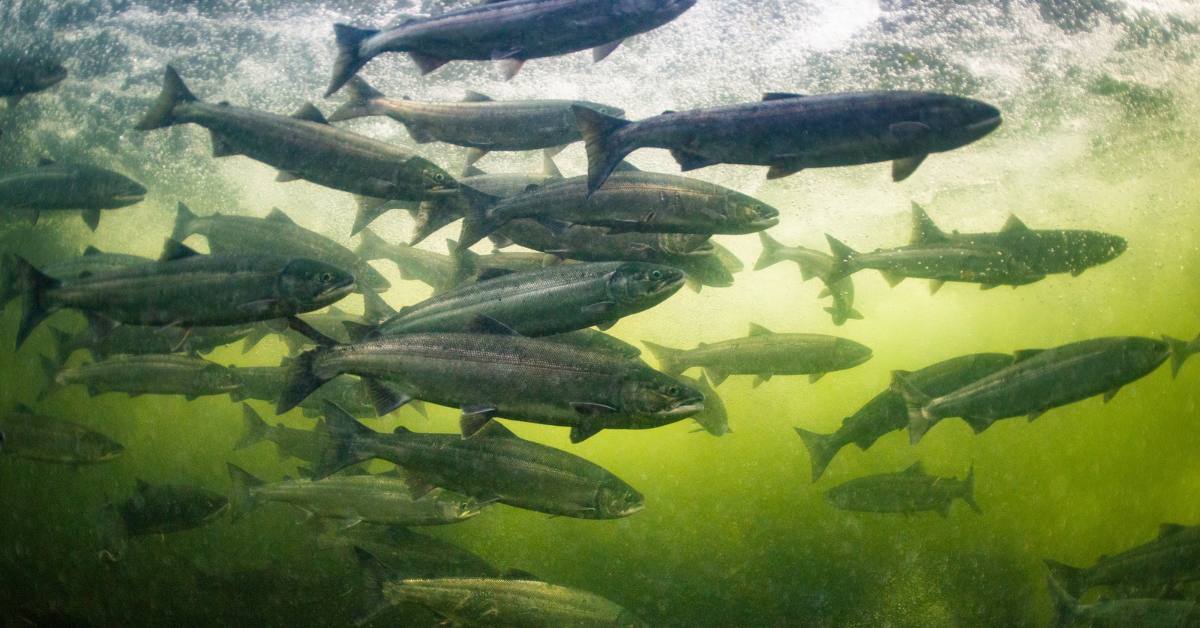
Sockeye Salmon Credit: Tavish Campbell
All hands are needed to make sure this drama continues. If the Pacific Salmon Commission and the parties to a new Treaty make transparency their central focus, everyone who cares about salmon can make sustainable decisions about their future. It is a complex and challenging job, which is exactly why we need as much light as possible to see the way forward. Maybe it’s time for Alaska to stop blocking it.
(1) Southeast Alaska Purse Seine Harvest Estimates Advisory – Statistical Week 31 – August 6, 2023
Share This Story!
At the 2026 Annual Meeting in Vancouver, it was clear that transparency remains the Pacific Salmon Treaty’s main hurdle
Pacific salmon are likely the world’s most complex natural resource. Fisheries scientists and managers in multiple state, provincial, and federal agencies work continuously with data to manage salmon populations and meet monitoring obligations under the Pacific Salmon Treaty. However, at the recent annual meeting of the Pacific Salmon Commission (the body that manages the Treaty) in Vancouver it was clear that Alaska—the Treaty’s most powerful signatory—is obstructing the flow of information. The solution lies in a renewed Treaty: one that embodies transparency. To get there, we must address Alaska’s resistance to providing British Columbia, Washington, and Oregon the full picture of which non-Alaskan origin salmon are caught in Southeast Alaska fisheries situated on the migration corridors of south-migrating salmon.
Fisheries Advisor David Mills
The Treaty’s Heavyweight
Alaska’s salmon fisheries operate at an entirely different order of magnitude. For example, in 2023, the harvest from just four fishing districts in Southeast Alaska was three times higher than all salmon fisheries in Oregon, Washington, and B.C. combined. The bulk of Alaska’s salmon catch is driven by massive pink and chum returns and Alaska measures success in the tens of millions. Meanwhile most fisheries in British Columbia are highly restricted, and for many fisheries in Washington and Oregon, a few hundred fish can be the difference between a season opening or a total shutdown.
The scale differential creates a unique tension within the Treaty. Alaska manages sprawling, industrial-scale fisheries in the Southeast year-round, with multiple points of impact on stocks to the south. Meanwhile, B.C., Washington, and Oregon often wait each year for enough information to gain the confidence to open their own fisheries. Without a commitment to count all the fish Alaska catches, and without genetic information describing their origins, it’s more difficult for southern managers to forecast returns, make data-driven decisions about whether their fisheries should open or remain closed, or advocate for fairness in both harvesting and conservation objectives.
Chinook Salmon
Alaska’s Hidden Harvests
The Treaty does not require full-cost accounting from Alaska. And, Alaska isn’t offering it up. So, commissioners do this dance where everyone knows Alaska is catching more of our fish than they are reporting. But nobody has a mechanism for bringing it out in the open and talking about it. Here are three examples.
Fraser Sockeye
In 2023, just one fishery, the District 104 seine, harvested over 162,000 sockeye—the vast majority Canadian-origin. Yet, the Treaty’s management framework relied on just 115 usable genetic samples to estimate how many of those were principally south-migrating.
Alaska takes thousands of sockeye scale samples from its interception fisheries, yet it only provides the Fraser Panel with those it self-identifies as “Fraser” fish, despite yearly requests for a broader range. The resulting snapshots of the total catch are filled with uncertainty, making them easy to dismiss. If Alaska provided the requested samples, the full resolution of the non-Alaskan sockeye harvest might be known. In both instances, Alaska avoids accountability for the full impact of its fisheries on Fraser River and other southern sockeye stocks, many of which are depleted.
B.C., WA, and OR Chinook
Chinook are the flashpoint of the Treaty and are constantly fought over. Many stocks are threatened. At this point, it is fair to ask why Alaska (or anyone else, for that matter) should be taking other people’s fish, especially since B.C., Washington, and Oregon have closed or significantly curtailed most of their commercial chinook fisheries. Chinook are essential prey for Southern Resident Killer Whales, they anchor recreational fisheries, and they have been missing from up-river communities for years. Yet, Alaska is routinely allocated a couple hundred thousand each year.
Alaska distributes its allocation among its fisheries. Most go to the actively monitored Troll, which is why we know precisely how many non-Alaskan fish are caught. But how many more disappear as incidental harvest in seine or drift gillnet fisheries? Alaskan seine fisheries are fundamentally different from B.C. seine fisheries: they do not brail their catch (bring it aboard in small batches for easier live sorting) and are not required to release non-target species before they die. They are also not independently monitored using at-sea observers or on-board cameras. In 2023, only 8,000 of Alaska’s Treaty-allowable Chinook catch was allocated to seiners. They were given one opening and reported a catch of 5,600 fish as shown in the table below (1).
Screenshot 2026-03-02 145054
Reported 2023 Chinook Catch in Southeast Alaska’s District 101 and 104 Seine Fisheries
But what happens to the chinook caught in every other opening where chinook retention is not allowed but they are nonetheless caught? Take a moment and watch this video of Southeast Alaskan seiners in action; it is unlikely that non-target chinook, coho, steelhead, or any other fish is released alive. While a certain level of chinook mortality is ascribed to the seine fishery, it is almost certainly an underestimate, and Alaska does not report the number of chinook killed or discarded outside of the specific fishery openings. All of this adds up to lots of missing chinook, which, if you are a river-fisher, you are painfully aware of.
Skeena Sockeye and Steelhead
Southeast Alaska officially classifies Districts 101 and 104 as “pink salmon-directed” fisheries. Located on the migration routes for Canadian and other south-migrating salmon, the Treaty grants these fisheries allocations of Skeena and Nass sockeye.
Last season, Skeena sockeye were eight times more valuable than pinks, creating a significant economic draw. While harvesters must remain within treaty limits until the end of July, in August Alaskans have unrestricted access to Canadian salmon. Consequently, in years where the price differential is substantial or pink returns are poor, most of the fleet in the southeast shifts into District 104 where it is “open season.” This shift occurs during the peak migration window for later-timed wild Skeena sockeye and steelhead, which have seen record low returns in the past 5 years, and for which fisheries at the mouth of the Skeena River close early to protect. Because Alaska does not share population-specific genetic data or report the number of steelhead caught, it is currently impossible to track this fishery’s true impact on the wild populations of the Skeena watershed.
Profiting From the Status Quo
The Pacific Salmon Treaty provides science-based harvest limits and bilateral conservation goals essential to Alaska’s Marine Stewardship Council (MSC) certification. By adhering to the Treaty’s quotas, Alaska can demonstrate to MSC auditors that its fisheries operate within a globally recognized, rules-based system, thus granting the legitimacy Alaska needs to maintain its “blue-label” status in the global marketplace.
However, the science is only as good as the monitoring and reporting data supporting it, and the existing Treaty does not require Alaska to count all the fish.
Without this international agreement, Alaska’s massive interception of Canadian-bound salmon would be classified as “uncoordinated overfishing”; a direct violation of MSC sustainability criteria. This goes a long way toward explaining why Alaska tries to prevent anyone from “looking under the hood.” If the status quo prevails, Alaska and the Marine Stewardship Council will continue profiting from an agreement that only counts some of the fish, some of the time, and allows fishing when basic spawning goals are not being met.
Running Interference at the Commission
During their meetings in Vancouver, the Fraser River Panel, which is led by a Washingtonian, submitted recommendations to the commission. Chief among them was a request for assistance in securing enough sockeye scale samples from Alaska to allow them to do their job.
Watershed Watch staff attended Pacific Salmon Treaty meetings this February
Incredibly, the head of Alaska’s Department of Fish and Game, Doug Vincent-Lang, took the microphone and all but said he would oppose the acceptance of the Fraser Panel’s report if the recommendations were binding.
This pattern of interference extended to the Northern Panel bilateral meetings, where public observers, including Watershed Watch staff and allies, were removed. Twice. For all the reasons listed above, this will be the Treaty’s most contentious negotiating space, yet neither side currently has a negotiating mandate; and absent a mandate, bilateral panel meetings are intended to be open to the public.
However, in Vancouver, the Alaskans pulled out the “we’re negotiating” card and had the public removed. The inconsistencies between harvesting approaches and conservation objectives are visible to observers attending commission meetings, and apparently well known to the Treaty’s commissioners. However, countries can’t both litigate these issues in public, and negotiate in good faith. But we can. And it’s clear that Alaska has something to hide.
Trust and Transparency Go Hand in Hand.
Salmon are mystery dramas unfolding in real time. They grow up together in the vast, loosely policed international waters of the North Pacific—a shared global ocean that regulates the Earth’s climate. When they return home, they transit past fish farms and complicated inshore fisheries, through urban estuaries and low-lying agricultural lands, across borders, and into vastly different watersheds filled with competing interests. Somehow, their offspring manage to start all over again and head back out to sea, navigating the same journey in reverse as tiny animals weighing less than 20 grams.
Sockeye Salmon Credit: Tavish Campbell
All hands are needed to make sure this drama continues. If the Pacific Salmon Commission and the parties to a new Treaty make transparency their central focus, everyone who cares about salmon can make sustainable decisions about their future. It is a complex and challenging job, which is exactly why we need as much light as possible to see the way forward. Maybe it’s time for Alaska to stop blocking it.
(1) Southeast Alaska Purse Seine Harvest Estimates Advisory – Statistical Week 31 – August 6, 2023
Share This Story!
At the 2026 Annual Meeting in Vancouver, it was clear that transparency remains the Pacific Salmon Treaty’s main hurdle
Pacific salmon are likely the world’s most complex natural resource. Fisheries scientists and managers in multiple state, provincial, and federal agencies work continuously with data to manage salmon populations and meet monitoring obligations under the Pacific Salmon Treaty. However, at the recent annual meeting of the Pacific Salmon Commission (the body that manages the Treaty) in Vancouver it was clear that Alaska—the Treaty’s most powerful signatory—is obstructing the flow of information. The solution lies in a renewed Treaty: one that embodies transparency. To get there, we must address Alaska’s resistance to providing British Columbia, Washington, and Oregon the full picture of which non-Alaskan origin salmon are caught in Southeast Alaska fisheries situated on the migration corridors of south-migrating salmon.
Fisheries Advisor David Mills
The Treaty’s Heavyweight
Alaska’s salmon fisheries operate at an entirely different order of magnitude. For example, in 2023, the harvest from just four fishing districts in Southeast Alaska was three times higher than all salmon fisheries in Oregon, Washington, and B.C. combined. The bulk of Alaska’s salmon catch is driven by massive pink and chum returns and Alaska measures success in the tens of millions. Meanwhile most fisheries in British Columbia are highly restricted, and for many fisheries in Washington and Oregon, a few hundred fish can be the difference between a season opening or a total shutdown.
The scale differential creates a unique tension within the Treaty. Alaska manages sprawling, industrial-scale fisheries in the Southeast year-round, with multiple points of impact on stocks to the south. Meanwhile, B.C., Washington, and Oregon often wait each year for enough information to gain the confidence to open their own fisheries. Without a commitment to count all the fish Alaska catches, and without genetic information describing their origins, it’s more difficult for southern managers to forecast returns, make data-driven decisions about whether their fisheries should open or remain closed, or advocate for fairness in both harvesting and conservation objectives.
Chinook Salmon
Alaska’s Hidden Harvests
The Treaty does not require full-cost accounting from Alaska. And, Alaska isn’t offering it up. So, commissioners do this dance where everyone knows Alaska is catching more of our fish than they are reporting. But nobody has a mechanism for bringing it out in the open and talking about it. Here are three examples.
Fraser Sockeye
In 2023, just one fishery, the District 104 seine, harvested over 162,000 sockeye—the vast majority Canadian-origin. Yet, the Treaty’s management framework relied on just 115 usable genetic samples to estimate how many of those were principally south-migrating.
Alaska takes thousands of sockeye scale samples from its interception fisheries, yet it only provides the Fraser Panel with those it self-identifies as “Fraser” fish, despite yearly requests for a broader range. The resulting snapshots of the total catch are filled with uncertainty, making them easy to dismiss. If Alaska provided the requested samples, the full resolution of the non-Alaskan sockeye harvest might be known. In both instances, Alaska avoids accountability for the full impact of its fisheries on Fraser River and other southern sockeye stocks, many of which are depleted.
B.C., WA, and OR Chinook
Chinook are the flashpoint of the Treaty and are constantly fought over. Many stocks are threatened. At this point, it is fair to ask why Alaska (or anyone else, for that matter) should be taking other people’s fish, especially since B.C., Washington, and Oregon have closed or significantly curtailed most of their commercial chinook fisheries. Chinook are essential prey for Southern Resident Killer Whales, they anchor recreational fisheries, and they have been missing from up-river communities for years. Yet, Alaska is routinely allocated a couple hundred thousand each year.
Alaska distributes its allocation among its fisheries. Most go to the actively monitored Troll, which is why we know precisely how many non-Alaskan fish are caught. But how many more disappear as incidental harvest in seine or drift gillnet fisheries? Alaskan seine fisheries are fundamentally different from B.C. seine fisheries: they do not brail their catch (bring it aboard in small batches for easier live sorting) and are not required to release non-target species before they die. They are also not independently monitored using at-sea observers or on-board cameras. In 2023, only 8,000 of Alaska’s Treaty-allowable Chinook catch was allocated to seiners. They were given one opening and reported a catch of 5,600 fish as shown in the table below (1).
Screenshot 2026-03-02 145054
Reported 2023 Chinook Catch in Southeast Alaska’s District 101 and 104 Seine Fisheries
But what happens to the chinook caught in every other opening where chinook retention is not allowed but they are nonetheless caught? Take a moment and watch this video of Southeast Alaskan seiners in action; it is unlikely that non-target chinook, coho, steelhead, or any other fish is released alive. While a certain level of chinook mortality is ascribed to the seine fishery, it is almost certainly an underestimate, and Alaska does not report the number of chinook killed or discarded outside of the specific fishery openings. All of this adds up to lots of missing chinook, which, if you are a river-fisher, you are painfully aware of.
Skeena Sockeye and Steelhead
Southeast Alaska officially classifies Districts 101 and 104 as “pink salmon-directed” fisheries. Located on the migration routes for Canadian and other south-migrating salmon, the Treaty grants these fisheries allocations of Skeena and Nass sockeye.
Last season, Skeena sockeye were eight times more valuable than pinks, creating a significant economic draw. While harvesters must remain within treaty limits until the end of July, in August Alaskans have unrestricted access to Canadian salmon. Consequently, in years where the price differential is substantial or pink returns are poor, most of the fleet in the southeast shifts into District 104 where it is “open season.” This shift occurs during the peak migration window for later-timed wild Skeena sockeye and steelhead, which have seen record low returns in the past 5 years, and for which fisheries at the mouth of the Skeena River close early to protect. Because Alaska does not share population-specific genetic data or report the number of steelhead caught, it is currently impossible to track this fishery’s true impact on the wild populations of the Skeena watershed.
Profiting From the Status Quo
The Pacific Salmon Treaty provides science-based harvest limits and bilateral conservation goals essential to Alaska’s Marine Stewardship Council (MSC) certification. By adhering to the Treaty’s quotas, Alaska can demonstrate to MSC auditors that its fisheries operate within a globally recognized, rules-based system, thus granting the legitimacy Alaska needs to maintain its “blue-label” status in the global marketplace.
However, the science is only as good as the monitoring and reporting data supporting it, and the existing Treaty does not require Alaska to count all the fish.
Without this international agreement, Alaska’s massive interception of Canadian-bound salmon would be classified as “uncoordinated overfishing”; a direct violation of MSC sustainability criteria. This goes a long way toward explaining why Alaska tries to prevent anyone from “looking under the hood.” If the status quo prevails, Alaska and the Marine Stewardship Council will continue profiting from an agreement that only counts some of the fish, some of the time, and allows fishing when basic spawning goals are not being met.
Running Interference at the Commission
During their meetings in Vancouver, the Fraser River Panel, which is led by a Washingtonian, submitted recommendations to the commission. Chief among them was a request for assistance in securing enough sockeye scale samples from Alaska to allow them to do their job.
Watershed Watch staff attended Pacific Salmon Treaty meetings this February
Incredibly, the head of Alaska’s Department of Fish and Game, Doug Vincent-Lang, took the microphone and all but said he would oppose the acceptance of the Fraser Panel’s report if the recommendations were binding.
This pattern of interference extended to the Northern Panel bilateral meetings, where public observers, including Watershed Watch staff and allies, were removed. Twice. For all the reasons listed above, this will be the Treaty’s most contentious negotiating space, yet neither side currently has a negotiating mandate; and absent a mandate, bilateral panel meetings are intended to be open to the public.
However, in Vancouver, the Alaskans pulled out the “we’re negotiating” card and had the public removed. The inconsistencies between harvesting approaches and conservation objectives are visible to observers attending commission meetings, and apparently well known to the Treaty’s commissioners. However, countries can’t both litigate these issues in public, and negotiate in good faith. But we can. And it’s clear that Alaska has something to hide.
Trust and Transparency Go Hand in Hand.
Salmon are mystery dramas unfolding in real time. They grow up together in the vast, loosely policed international waters of the North Pacific—a shared global ocean that regulates the Earth’s climate. When they return home, they transit past fish farms and complicated inshore fisheries, through urban estuaries and low-lying agricultural lands, across borders, and into vastly different watersheds filled with competing interests. Somehow, their offspring manage to start all over again and head back out to sea, navigating the same journey in reverse as tiny animals weighing less than 20 grams.
Sockeye Salmon Credit: Tavish Campbell
All hands are needed to make sure this drama continues. If the Pacific Salmon Commission and the parties to a new Treaty make transparency their central focus, everyone who cares about salmon can make sustainable decisions about their future. It is a complex and challenging job, which is exactly why we need as much light as possible to see the way forward. Maybe it’s time for Alaska to stop blocking it.
(1) Southeast Alaska Purse Seine Harvest Estimates Advisory – Statistical Week 31 – August 6, 2023
Share This Story!