

This story was first featured in the Winter 2026 edition of The Osprey.
Early this winter, the British Columbia government delivered what may have been the bleakest steelhead update in the province’s recorded history. In an email to stakeholders on the status of Interior Fraser River steelhead, provincial biologists reported:
“Zero steelhead have been captured this year in test fisheries that produce the data used to forecast the abundance of spawners in the spring. This is the lowest catch result ever observed in over 40 years of these test fishing operations.”
From a World Class Fishery in the Desert, to a Deserted Fishery

Executive Director Aaron Hill
I first fished the Thompson with my dad in 1995. We were from Skeena country and it was new terrain for us. It was my first time fishing in rattlesnake country and I still remember our excitement at being on that big, powerful desert river flanked by sagebrush and ponderosa pine.
We stayed at a cheap motel and gathered every night with my dad’s chums from the Steelhead Society, at the iconic Log Cabin Pub in Spences Bridge. Being nearly a year shy of the legal drinking age of 19, I was flying under the radar. I listened intently as these seasoned anglers swapped fishing stories and debated the merits of various conservation strategies while downing pints in the smokey blue haze, as bighorn sheep and other taxidermied critters watched from the walls. One night we had dinner with Jack Hemingway and Sasha Tolstoy—descendants of legendary authors, and notorious fishing bums.
That’s the kind of scene it was, but not anymore. While the pub is still there, the glory days of the steelhead fishery are now a memory.
The run started struggling in the late 2000s and since 2016 it has been in the B.C. government’s “extreme conservation concern” zone. The recreational catch-and release fishery closed in 2018 and it hasn’t re-opened. Anglers don’t flock to Spences Bridge in the fall anymore, and the loss of the steelhead fishery has devastated the local economy. I usually drive through at least twice every year along Highway 1 and I get sad and wistful every time.
The Thompson steelhead run used to fluctuate between roughly 1,000 and 3,000 fish. In a November 19, 2025 email update, provincial biologist Robert Bison states that the number of spawners this year is predicted to be less than 19 fish. The Chilcotin run is predicted to be less than nine fish. And they don’t provide estimates for the smaller runs that make up the larger Interior Fraser steelhead complex. This feels a lot like a death rattle. Our provincial and federal governments have failed in their duty to protect and rebuild this magnificent race of fish.
The Plight of Interior Fraser River Steelhead
Readers of The Osprey are likely aware that most steelhead populations have been heavily overfished, largely because they return to their home rivers in smaller numbers than the commercially valuable salmon species that swim alongside them. In general, steelhead in B.C. and beyond have been mismanaged and have not received adequate protections from the full range of impacts they suffer.
The Thompson River run is the most famous of the Interior Fraser steelhead, which are made up of a handful of genetically and spatially distinct populations that return in late summer and spawn in an array of Fraser River tributaries upstream of Hell’s Gate. Interior Fraser steelhead are thought to be descended from fish that were isolated in the Columbia refugium the last time our continent was covered in glacial ice. They are revered by anglers for their superior size and strength compared to most coastal and winter-run steelhead.
Interior Fraser steelhead are crashing for several reasons. Experts cite various combinations of the following causes: bycatch in net fisheries targeting chum salmon in the Fraser River and Salish Sea, poor conditions in the ocean and in some of the freshwater habitats, and predation by seals and sea lions. This last factor is controversial, with strong arguments being made both for and against pinniped predation as an important limiting factor for interior Fraser steelhead.

Major stock groups of steelhead trout in the Fraser River system. (E~ approximate mean annual escapement in the 1990s) From the Review of Fraser River Steelhead Trout (Oncorhynchus mykiss), Ministry of Environment, Lands and Parks and Department of Fisheries and Oceans, October 1998
The inhospitable ocean and freshwater conditions are largely due to climate change, exacerbated in the rivers by loss of forest cover and over-extraction of water. Climate change is intensifying flooding and drought, which are being made even worse by loss of forest cover due to excessive clearcut logging, and climate-driven increases in wildfires and insect infestations. It is possible that the catastrophic flooding in the region in 2021, caused by an atmospheric river, may have played a role in this year’s terrible run. However, many other steelhead and salmon populations that were hit by the same flooding have not collapsed.
While fishing, habitat conditions, and predators are all likely conspiring against these legendary fish, ocean survival is often cited as the biggest likely culprit. Ocean survival is a broad factor that can encompass climate-related carrying capacity, fishing and predation. While climate is a dominant factor, fishing impacts are also significant and are widely recognized as the factor that can be most readily addressed by managers, should they ever make a serious effort to do so. These fishing impacts are occurring in both sanctioned and unsanctioned fisheries, and in-river as well as in marine approach areas on both sides of the border between B.C. and Washington State.

The estimated spawning abundances of Thompson River steelhead in relation to conservation reference points. The last data point illustrates the expected spawner abundance for this season’s return which will spawn in the spring of 2026.
A Story of Negligence and Corruption
A dose of strong government action could have prevented or at least mitigated the collapse of Interior Fraser steelhead. Back in 2019, when the Thompson returns were still in the hundreds, the scientists on the Committee on the Status of Endangered Wildlife in Canada (COSEWIC) assessed the Thompson and Chilcotin populations and designated them as “endangered.” COSEWIC is an independent body of experts with a mandate from the federal government to identify and assess species at risk. They recommended listing these endangered steelhead under Canada’s Species at Risk Act, which would have kicked off strong protections and recovery efforts. But it never happened, due in part to corruption of the process by officials at Fisheries and Oceans Canada. It was a massive scandal in the world of B.C. fisheries management and the whole story is worth a read.
The short version is that bureaucrats at Fisheries and Oceans Canada (DFO) fiddled with a crucial science advice document after it had been peer-reviewed and finalized by an array of government and independent scientists through the Canadian Science Advisory Secretariat. The document was a Recovery Potential Assessment that would inform the federal Minister of Environment in her recommendation to cabinet on whether to protect Thompson and Chilcotin steelhead under Canada’s Species at Risk Act. The result of the DFO bureaucrats’ fiddling with the report’s conclusions was to downplay the benefit that could be gained by reducing the numbers of Interior Fraser steelhead killed in fisheries targeting chum and other Pacific salmon. It was a shameful breach of the integrity of Canada’s federal science advisory process.

Angler David Collins with a fine wild steelhead caught and released on the Thompson River near Shaw Springs circa 1999 (pre-keep-’em-wet era). Photo by Greg Gordon
The scandal came to a head when B.C.’s Deputy Minister of Environment, Mark Zacharias, complained to his federal counterpart after DFO refused to restore the document’s summary to the version that had been signed off on by the assessment’s lead authors. In an admirable departure from bureaucratic pussyfooting, Mr. Zacharias charged DFO with changing the report’s conclusions to “support status-quo commercial salmon harvesting,” and stated that “…the DFO-authored summary is no longer scientifically defensible,” and that salmon fisheries are the “only substantial threat to Interior Fraser steelhead that can be immediately mitigated.” The B.C. Wildlife Federation deserves rivers of gratitude for their work in exposing this debacle.
Unfortunately, Mr. Zacharias’ political bosses in the B.C. legislature did not appreciate his salvo against the feds. Rumor has it that he was summoned to the Premier’s office for a talking-to. A few days later I spoke with the Environment Minister, George Heyman, and thanked him for his deputy’s principled stand for conservation and evidence-based decision making. He did not respond with the usual glow that politicians exude when praised. His face darkened, he looked at the floor, his mouth tightened, and he simply said “Wilkinson was pissed,” referring to the federal Fisheries Minister. Zacharias was fired a few months later, for unknown reasons.
In the end, those science-subverting bureaucrats won. Prime Minister Trudeau’s cabinet decided not to protect Thompson and Chilcotin steelhead under their endangered species law. In an Orwellian turn of phrase, Environment Minister Catherine McKenna informed Canadians that “The Governor in Council (GiC) has decided that not listing Thompson River and Chilcotin River Steelhead Trout under the Species at Risk Act would result in the greatest overall benefits to current and future generations of Canadians and the conservation of these wildlife species.” She might as well have said “one plus one equals three.”
The B.C. government went along with the charade and, working with the federal government, produced a modest and toothless action plan that failed to sufficiently protect Interior Fraser steelhead from the things that are killing them before they can spawn. At the very least, a strong, legally-mandated recovery plan would have helped us finally get serious about shutting down unselective salmon fisheries that use gillnets and kill significant numbers of fish from non-target species. This would have incentivized widespread adoption of selective types of gear that allow non-target fish to be released alive and healthy. Some will say it wouldn’t have made enough of a difference, but there was only one way to find out.
Action is the Antidote for Despair
Let’s not let this sad moment turn into apathy. There’s a glimmer of hope to be found in the Thompson and Chilcotin Rivers’ healthy populations of resident rainbow trout (the smaller, non-steelhead version that doesn’t go out to sea). They share the same genetics as steelhead and their descendants harbour the ability to go to sea and become steelhead. Things may look grim for this particular year class of Interior Fraser steelhead, but they’re not gone.
Now that it is clear that the B.C. and federal governments’ action plan is failing, as predicted, they should immediately convene stakeholders to devise a plan that will actually work. The first step in any serious rescue plan for these valuable fish would be to severely restrict the use of gillnets along their migration route and support fishers in switching to selective fishing gear, like fish traps and fish wheels. Robust, independent monitoring would be needed to measure and ensure success, along with strong enforcement to ensure compliance and prevent illegal, unreported and unregulated fishing.
To make this happen, Interior Fraser steelhead require immediate protection under Canada’s Species at Risk Act. The best time to do that was five years ago, but the next best time is now.
It must also be noted that other proposed strategies, like pinniped removals and hatchery intervention, require serious scrutiny. Decades of evidence show that hatchery programs can erode wild fish fitness, alter life history traits, and mask underlying problems rather than addressing the root causes of decline— particularly the solvable problem of fishing mortality. Targeted pinniped removal, by contrast, is a more limited and less risky management tool that warrants evidence-based evaluation as part of a broader recovery strategy.
Finally, we must learn from this disaster and keep it from unfolding elsewhere. There are scores of salmon and steelhead populations around this beautiful corner of the planet that are struggling but still holding on. Let’s fight for them.
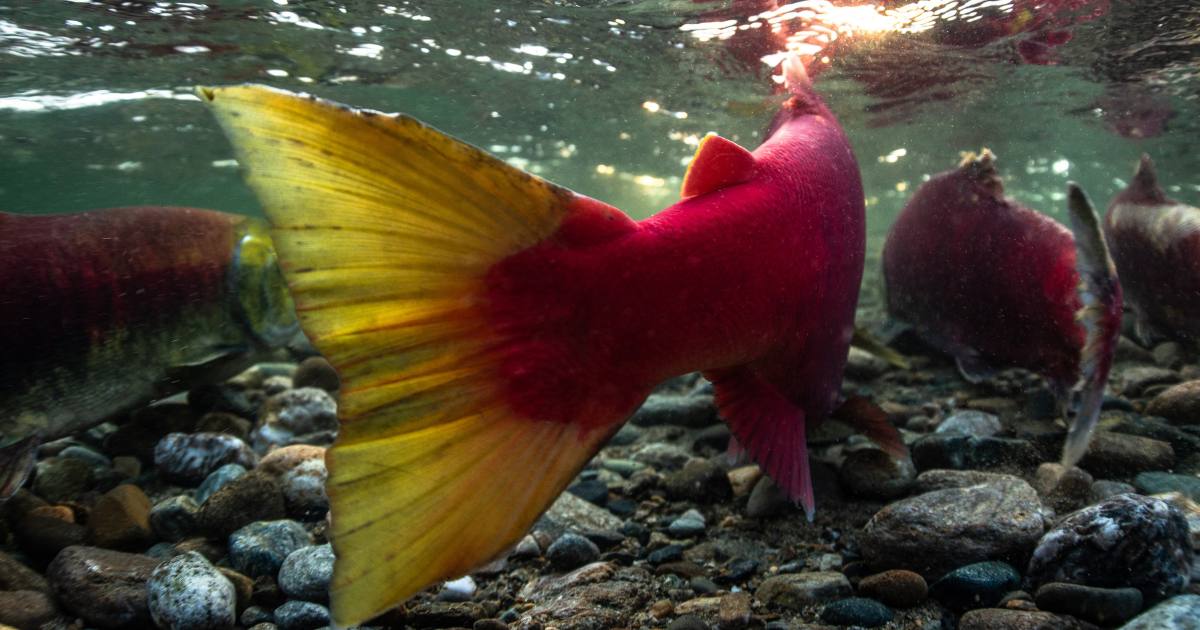
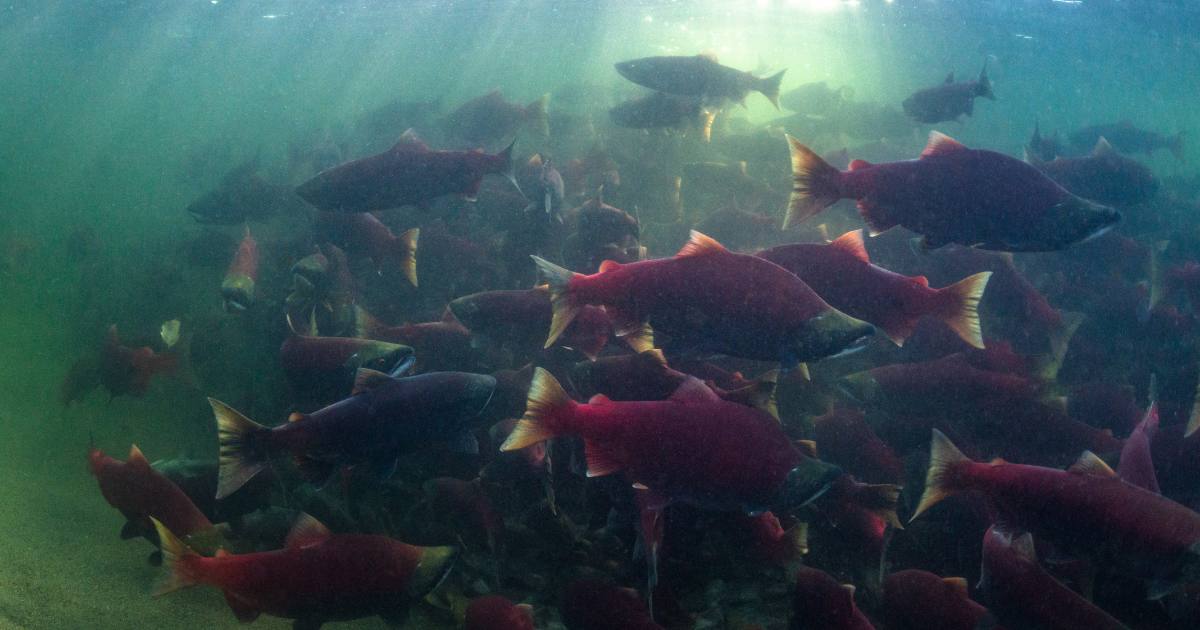
Let’s take some inspiration from the 2025 return of Fraser River sockeye.
They came back in numbers that exceeded official expectations by millions of fish, and this was the same year class that crashed hard in 2009 and led Prime Minister Stephen Harper to launch the Cohen Inquiry on the Decline of Sockeye Salmon in the Fraser River. That set the stage for Fisheries Minister Bernadette Jordan removing virus- and parasite-spewing fish farms from a large swath of the Fraser sockeye migration route in 2022. The juveniles of the 2025 run were the first to swim this route when the farms were cleared.

The dark blue waters of the Thompson meet the sediment-laden waters of the Fraser River at Lytton, British Columbia. Photo by The Interior. Creative Commons Attribution-Share Alike 4.0 International License.
There are many things we can do that will make a difference for wild salmon and steelhead. These include shutting down the Alaskan interception fisheries that are plundering Skeena and Nass River steelhead, transitioning to selective fisheries, opening up thousands of kilometres of vital nursery habitats that are being blocked by abandoned culverts and obsolete flood control structures, and getting the remaining fish farms out of B.C. waters. None of these things will come easy, but history showsthat wins for wild salmon and steelhead can be had with relentless work, cooperation and strategic thinking. Never give up.
If you want to give the governments of British Columbia and Canada a push to rescue Interior Fraser steelhead from doom, here are two places to start:
Hon. Randene Neill
Minister of Water, Land and Resource Stewardship
Government of British Columbia
WLRS.minister@gov.bc.ca
Hon. Joanne Thompson
Minister of Fisheries and Oceans
Government of Canada
Min@dfo-mpo.gc.ca
Share This Story!
This story was first featured in the Winter 2026 edition of The Osprey.
Early this winter, the British Columbia government delivered what may have been the bleakest steelhead update in the province’s recorded history. In an email to stakeholders on the status of Interior Fraser River steelhead, provincial biologists reported:
“Zero steelhead have been captured this year in test fisheries that produce the data used to forecast the abundance of spawners in the spring. This is the lowest catch result ever observed in over 40 years of these test fishing operations.”
From a World Class Fishery in the Desert, to a Deserted Fishery
Executive Director Aaron Hill
I first fished the Thompson with my dad in 1995. We were from Skeena country and it was new terrain for us. It was my first time fishing in rattlesnake country and I still remember our excitement at being on that big, powerful desert river flanked by sagebrush and ponderosa pine.
We stayed at a cheap motel and gathered every night with my dad’s chums from the Steelhead Society, at the iconic Log Cabin Pub in Spences Bridge. Being nearly a year shy of the legal drinking age of 19, I was flying under the radar. I listened intently as these seasoned anglers swapped fishing stories and debated the merits of various conservation strategies while downing pints in the smokey blue haze, as bighorn sheep and other taxidermied critters watched from the walls. One night we had dinner with Jack Hemingway and Sasha Tolstoy—descendants of legendary authors, and notorious fishing bums.
That’s the kind of scene it was, but not anymore. While the pub is still there, the glory days of the steelhead fishery are now a memory.
The run started struggling in the late 2000s and since 2016 it has been in the B.C. government’s “extreme conservation concern” zone. The recreational catch-and release fishery closed in 2018 and it hasn’t re-opened. Anglers don’t flock to Spences Bridge in the fall anymore, and the loss of the steelhead fishery has devastated the local economy. I usually drive through at least twice every year along Highway 1 and I get sad and wistful every time.
The Thompson steelhead run used to fluctuate between roughly 1,000 and 3,000 fish. In a November 19, 2025 email update, provincial biologist Robert Bison states that the number of spawners this year is predicted to be less than 19 fish. The Chilcotin run is predicted to be less than nine fish. And they don’t provide estimates for the smaller runs that make up the larger Interior Fraser steelhead complex. This feels a lot like a death rattle. Our provincial and federal governments have failed in their duty to protect and rebuild this magnificent race of fish.
The Plight of Interior Fraser River Steelhead
Readers of The Osprey are likely aware that most steelhead populations have been heavily overfished, largely because they return to their home rivers in smaller numbers than the commercially valuable salmon species that swim alongside them. In general, steelhead in B.C. and beyond have been mismanaged and have not received adequate protections from the full range of impacts they suffer.
The Thompson River run is the most famous of the Interior Fraser steelhead, which are made up of a handful of genetically and spatially distinct populations that return in late summer and spawn in an array of Fraser River tributaries upstream of Hell’s Gate. Interior Fraser steelhead are thought to be descended from fish that were isolated in the Columbia refugium the last time our continent was covered in glacial ice. They are revered by anglers for their superior size and strength compared to most coastal and winter-run steelhead.
Interior Fraser steelhead are crashing for several reasons. Experts cite various combinations of the following causes: bycatch in net fisheries targeting chum salmon in the Fraser River and Salish Sea, poor conditions in the ocean and in some of the freshwater habitats, and predation by seals and sea lions. This last factor is controversial, with strong arguments being made both for and against pinniped predation as an important limiting factor for interior Fraser steelhead.
Major stock groups of steelhead trout in the Fraser River system. (E~ approximate mean annual escapement in the 1990s) From the Review of Fraser River Steelhead Trout (Oncorhynchus mykiss), Ministry of Environment, Lands and Parks and Department of Fisheries and Oceans, October 1998
The inhospitable ocean and freshwater conditions are largely due to climate change, exacerbated in the rivers by loss of forest cover and over-extraction of water. Climate change is intensifying flooding and drought, which are being made even worse by loss of forest cover due to excessive clearcut logging, and climate-driven increases in wildfires and insect infestations. It is possible that the catastrophic flooding in the region in 2021, caused by an atmospheric river, may have played a role in this year’s terrible run. However, many other steelhead and salmon populations that were hit by the same flooding have not collapsed.
While fishing, habitat conditions, and predators are all likely conspiring against these legendary fish, ocean survival is often cited as the biggest likely culprit. Ocean survival is a broad factor that can encompass climate-related carrying capacity, fishing and predation. While climate is a dominant factor, fishing impacts are also significant and are widely recognized as the factor that can be most readily addressed by managers, should they ever make a serious effort to do so. These fishing impacts are occurring in both sanctioned and unsanctioned fisheries, and in-river as well as in marine approach areas on both sides of the border between B.C. and Washington State.
The estimated spawning abundances of Thompson River steelhead in relation to conservation reference points. The last data point illustrates the expected spawner abundance for this season’s return which will spawn in the spring of 2026.
A Story of Negligence and Corruption
A dose of strong government action could have prevented or at least mitigated the collapse of Interior Fraser steelhead. Back in 2019, when the Thompson returns were still in the hundreds, the scientists on the Committee on the Status of Endangered Wildlife in Canada (COSEWIC) assessed the Thompson and Chilcotin populations and designated them as “endangered.” COSEWIC is an independent body of experts with a mandate from the federal government to identify and assess species at risk. They recommended listing these endangered steelhead under Canada’s Species at Risk Act, which would have kicked off strong protections and recovery efforts. But it never happened, due in part to corruption of the process by officials at Fisheries and Oceans Canada. It was a massive scandal in the world of B.C. fisheries management and the whole story is worth a read.
The short version is that bureaucrats at Fisheries and Oceans Canada (DFO) fiddled with a crucial science advice document after it had been peer-reviewed and finalized by an array of government and independent scientists through the Canadian Science Advisory Secretariat. The document was a Recovery Potential Assessment that would inform the federal Minister of Environment in her recommendation to cabinet on whether to protect Thompson and Chilcotin steelhead under Canada’s Species at Risk Act. The result of the DFO bureaucrats’ fiddling with the report’s conclusions was to downplay the benefit that could be gained by reducing the numbers of Interior Fraser steelhead killed in fisheries targeting chum and other Pacific salmon. It was a shameful breach of the integrity of Canada’s federal science advisory process.
Angler David Collins with a fine wild steelhead caught and released on the Thompson River near Shaw Springs circa 1999 (pre-keep-’em-wet era). Photo by Greg Gordon
The scandal came to a head when B.C.’s Deputy Minister of Environment, Mark Zacharias, complained to his federal counterpart after DFO refused to restore the document’s summary to the version that had been signed off on by the assessment’s lead authors. In an admirable departure from bureaucratic pussyfooting, Mr. Zacharias charged DFO with changing the report’s conclusions to “support status-quo commercial salmon harvesting,” and stated that “…the DFO-authored summary is no longer scientifically defensible,” and that salmon fisheries are the “only substantial threat to Interior Fraser steelhead that can be immediately mitigated.” The B.C. Wildlife Federation deserves rivers of gratitude for their work in exposing this debacle.
Unfortunately, Mr. Zacharias’ political bosses in the B.C. legislature did not appreciate his salvo against the feds. Rumor has it that he was summoned to the Premier’s office for a talking-to. A few days later I spoke with the Environment Minister, George Heyman, and thanked him for his deputy’s principled stand for conservation and evidence-based decision making. He did not respond with the usual glow that politicians exude when praised. His face darkened, he looked at the floor, his mouth tightened, and he simply said “Wilkinson was pissed,” referring to the federal Fisheries Minister. Zacharias was fired a few months later, for unknown reasons.
In the end, those science-subverting bureaucrats won. Prime Minister Trudeau’s cabinet decided not to protect Thompson and Chilcotin steelhead under their endangered species law. In an Orwellian turn of phrase, Environment Minister Catherine McKenna informed Canadians that “The Governor in Council (GiC) has decided that not listing Thompson River and Chilcotin River Steelhead Trout under the Species at Risk Act would result in the greatest overall benefits to current and future generations of Canadians and the conservation of these wildlife species.” She might as well have said “one plus one equals three.”
The B.C. government went along with the charade and, working with the federal government, produced a modest and toothless action plan that failed to sufficiently protect Interior Fraser steelhead from the things that are killing them before they can spawn. At the very least, a strong, legally-mandated recovery plan would have helped us finally get serious about shutting down unselective salmon fisheries that use gillnets and kill significant numbers of fish from non-target species. This would have incentivized widespread adoption of selective types of gear that allow non-target fish to be released alive and healthy. Some will say it wouldn’t have made enough of a difference, but there was only one way to find out.
Action is the Antidote for Despair
Let’s not let this sad moment turn into apathy. There’s a glimmer of hope to be found in the Thompson and Chilcotin Rivers’ healthy populations of resident rainbow trout (the smaller, non-steelhead version that doesn’t go out to sea). They share the same genetics as steelhead and their descendants harbour the ability to go to sea and become steelhead. Things may look grim for this particular year class of Interior Fraser steelhead, but they’re not gone.
Now that it is clear that the B.C. and federal governments’ action plan is failing, as predicted, they should immediately convene stakeholders to devise a plan that will actually work. The first step in any serious rescue plan for these valuable fish would be to severely restrict the use of gillnets along their migration route and support fishers in switching to selective fishing gear, like fish traps and fish wheels. Robust, independent monitoring would be needed to measure and ensure success, along with strong enforcement to ensure compliance and prevent illegal, unreported and unregulated fishing.
To make this happen, Interior Fraser steelhead require immediate protection under Canada’s Species at Risk Act. The best time to do that was five years ago, but the next best time is now.
It must also be noted that other proposed strategies, like pinniped removals and hatchery intervention, require serious scrutiny. Decades of evidence show that hatchery programs can erode wild fish fitness, alter life history traits, and mask underlying problems rather than addressing the root causes of decline— particularly the solvable problem of fishing mortality. Targeted pinniped removal, by contrast, is a more limited and less risky management tool that warrants evidence-based evaluation as part of a broader recovery strategy.
Finally, we must learn from this disaster and keep it from unfolding elsewhere. There are scores of salmon and steelhead populations around this beautiful corner of the planet that are struggling but still holding on. Let’s fight for them.
Let’s take some inspiration from the 2025 return of Fraser River sockeye.
They came back in numbers that exceeded official expectations by millions of fish, and this was the same year class that crashed hard in 2009 and led Prime Minister Stephen Harper to launch the Cohen Inquiry on the Decline of Sockeye Salmon in the Fraser River. That set the stage for Fisheries Minister Bernadette Jordan removing virus- and parasite-spewing fish farms from a large swath of the Fraser sockeye migration route in 2022. The juveniles of the 2025 run were the first to swim this route when the farms were cleared.
The dark blue waters of the Thompson meet the sediment-laden waters of the Fraser River at Lytton, British Columbia. Photo by The Interior. Creative Commons Attribution-Share Alike 4.0 International License.
There are many things we can do that will make a difference for wild salmon and steelhead. These include shutting down the Alaskan interception fisheries that are plundering Skeena and Nass River steelhead, transitioning to selective fisheries, opening up thousands of kilometres of vital nursery habitats that are being blocked by abandoned culverts and obsolete flood control structures, and getting the remaining fish farms out of B.C. waters. None of these things will come easy, but history showsthat wins for wild salmon and steelhead can be had with relentless work, cooperation and strategic thinking. Never give up.
If you want to give the governments of British Columbia and Canada a push to rescue Interior Fraser steelhead from doom, here are two places to start:
Hon. Randene Neill
Minister of Water, Land and Resource Stewardship
Government of British Columbia
WLRS.minister@gov.bc.ca
Hon. Joanne Thompson
Minister of Fisheries and Oceans
Government of Canada
Min@dfo-mpo.gc.ca
Share This Story!
This story was first featured in the Winter 2026 edition of The Osprey.
Early this winter, the British Columbia government delivered what may have been the bleakest steelhead update in the province’s recorded history. In an email to stakeholders on the status of Interior Fraser River steelhead, provincial biologists reported:
“Zero steelhead have been captured this year in test fisheries that produce the data used to forecast the abundance of spawners in the spring. This is the lowest catch result ever observed in over 40 years of these test fishing operations.”
From a World Class Fishery in the Desert, to a Deserted Fishery
Executive Director Aaron Hill
I first fished the Thompson with my dad in 1995. We were from Skeena country and it was new terrain for us. It was my first time fishing in rattlesnake country and I still remember our excitement at being on that big, powerful desert river flanked by sagebrush and ponderosa pine.
We stayed at a cheap motel and gathered every night with my dad’s chums from the Steelhead Society, at the iconic Log Cabin Pub in Spences Bridge. Being nearly a year shy of the legal drinking age of 19, I was flying under the radar. I listened intently as these seasoned anglers swapped fishing stories and debated the merits of various conservation strategies while downing pints in the smokey blue haze, as bighorn sheep and other taxidermied critters watched from the walls. One night we had dinner with Jack Hemingway and Sasha Tolstoy—descendants of legendary authors, and notorious fishing bums.
That’s the kind of scene it was, but not anymore. While the pub is still there, the glory days of the steelhead fishery are now a memory.
The run started struggling in the late 2000s and since 2016 it has been in the B.C. government’s “extreme conservation concern” zone. The recreational catch-and release fishery closed in 2018 and it hasn’t re-opened. Anglers don’t flock to Spences Bridge in the fall anymore, and the loss of the steelhead fishery has devastated the local economy. I usually drive through at least twice every year along Highway 1 and I get sad and wistful every time.
The Thompson steelhead run used to fluctuate between roughly 1,000 and 3,000 fish. In a November 19, 2025 email update, provincial biologist Robert Bison states that the number of spawners this year is predicted to be less than 19 fish. The Chilcotin run is predicted to be less than nine fish. And they don’t provide estimates for the smaller runs that make up the larger Interior Fraser steelhead complex. This feels a lot like a death rattle. Our provincial and federal governments have failed in their duty to protect and rebuild this magnificent race of fish.
The Plight of Interior Fraser River Steelhead
Readers of The Osprey are likely aware that most steelhead populations have been heavily overfished, largely because they return to their home rivers in smaller numbers than the commercially valuable salmon species that swim alongside them. In general, steelhead in B.C. and beyond have been mismanaged and have not received adequate protections from the full range of impacts they suffer.
The Thompson River run is the most famous of the Interior Fraser steelhead, which are made up of a handful of genetically and spatially distinct populations that return in late summer and spawn in an array of Fraser River tributaries upstream of Hell’s Gate. Interior Fraser steelhead are thought to be descended from fish that were isolated in the Columbia refugium the last time our continent was covered in glacial ice. They are revered by anglers for their superior size and strength compared to most coastal and winter-run steelhead.
Interior Fraser steelhead are crashing for several reasons. Experts cite various combinations of the following causes: bycatch in net fisheries targeting chum salmon in the Fraser River and Salish Sea, poor conditions in the ocean and in some of the freshwater habitats, and predation by seals and sea lions. This last factor is controversial, with strong arguments being made both for and against pinniped predation as an important limiting factor for interior Fraser steelhead.
Major stock groups of steelhead trout in the Fraser River system. (E~ approximate mean annual escapement in the 1990s) From the Review of Fraser River Steelhead Trout (Oncorhynchus mykiss), Ministry of Environment, Lands and Parks and Department of Fisheries and Oceans, October 1998
The inhospitable ocean and freshwater conditions are largely due to climate change, exacerbated in the rivers by loss of forest cover and over-extraction of water. Climate change is intensifying flooding and drought, which are being made even worse by loss of forest cover due to excessive clearcut logging, and climate-driven increases in wildfires and insect infestations. It is possible that the catastrophic flooding in the region in 2021, caused by an atmospheric river, may have played a role in this year’s terrible run. However, many other steelhead and salmon populations that were hit by the same flooding have not collapsed.
While fishing, habitat conditions, and predators are all likely conspiring against these legendary fish, ocean survival is often cited as the biggest likely culprit. Ocean survival is a broad factor that can encompass climate-related carrying capacity, fishing and predation. While climate is a dominant factor, fishing impacts are also significant and are widely recognized as the factor that can be most readily addressed by managers, should they ever make a serious effort to do so. These fishing impacts are occurring in both sanctioned and unsanctioned fisheries, and in-river as well as in marine approach areas on both sides of the border between B.C. and Washington State.
The estimated spawning abundances of Thompson River steelhead in relation to conservation reference points. The last data point illustrates the expected spawner abundance for this season’s return which will spawn in the spring of 2026.
A Story of Negligence and Corruption
A dose of strong government action could have prevented or at least mitigated the collapse of Interior Fraser steelhead. Back in 2019, when the Thompson returns were still in the hundreds, the scientists on the Committee on the Status of Endangered Wildlife in Canada (COSEWIC) assessed the Thompson and Chilcotin populations and designated them as “endangered.” COSEWIC is an independent body of experts with a mandate from the federal government to identify and assess species at risk. They recommended listing these endangered steelhead under Canada’s Species at Risk Act, which would have kicked off strong protections and recovery efforts. But it never happened, due in part to corruption of the process by officials at Fisheries and Oceans Canada. It was a massive scandal in the world of B.C. fisheries management and the whole story is worth a read.
The short version is that bureaucrats at Fisheries and Oceans Canada (DFO) fiddled with a crucial science advice document after it had been peer-reviewed and finalized by an array of government and independent scientists through the Canadian Science Advisory Secretariat. The document was a Recovery Potential Assessment that would inform the federal Minister of Environment in her recommendation to cabinet on whether to protect Thompson and Chilcotin steelhead under Canada’s Species at Risk Act. The result of the DFO bureaucrats’ fiddling with the report’s conclusions was to downplay the benefit that could be gained by reducing the numbers of Interior Fraser steelhead killed in fisheries targeting chum and other Pacific salmon. It was a shameful breach of the integrity of Canada’s federal science advisory process.
Angler David Collins with a fine wild steelhead caught and released on the Thompson River near Shaw Springs circa 1999 (pre-keep-’em-wet era). Photo by Greg Gordon
The scandal came to a head when B.C.’s Deputy Minister of Environment, Mark Zacharias, complained to his federal counterpart after DFO refused to restore the document’s summary to the version that had been signed off on by the assessment’s lead authors. In an admirable departure from bureaucratic pussyfooting, Mr. Zacharias charged DFO with changing the report’s conclusions to “support status-quo commercial salmon harvesting,” and stated that “…the DFO-authored summary is no longer scientifically defensible,” and that salmon fisheries are the “only substantial threat to Interior Fraser steelhead that can be immediately mitigated.” The B.C. Wildlife Federation deserves rivers of gratitude for their work in exposing this debacle.
Unfortunately, Mr. Zacharias’ political bosses in the B.C. legislature did not appreciate his salvo against the feds. Rumor has it that he was summoned to the Premier’s office for a talking-to. A few days later I spoke with the Environment Minister, George Heyman, and thanked him for his deputy’s principled stand for conservation and evidence-based decision making. He did not respond with the usual glow that politicians exude when praised. His face darkened, he looked at the floor, his mouth tightened, and he simply said “Wilkinson was pissed,” referring to the federal Fisheries Minister. Zacharias was fired a few months later, for unknown reasons.
In the end, those science-subverting bureaucrats won. Prime Minister Trudeau’s cabinet decided not to protect Thompson and Chilcotin steelhead under their endangered species law. In an Orwellian turn of phrase, Environment Minister Catherine McKenna informed Canadians that “The Governor in Council (GiC) has decided that not listing Thompson River and Chilcotin River Steelhead Trout under the Species at Risk Act would result in the greatest overall benefits to current and future generations of Canadians and the conservation of these wildlife species.” She might as well have said “one plus one equals three.”
The B.C. government went along with the charade and, working with the federal government, produced a modest and toothless action plan that failed to sufficiently protect Interior Fraser steelhead from the things that are killing them before they can spawn. At the very least, a strong, legally-mandated recovery plan would have helped us finally get serious about shutting down unselective salmon fisheries that use gillnets and kill significant numbers of fish from non-target species. This would have incentivized widespread adoption of selective types of gear that allow non-target fish to be released alive and healthy. Some will say it wouldn’t have made enough of a difference, but there was only one way to find out.
Action is the Antidote for Despair
Let’s not let this sad moment turn into apathy. There’s a glimmer of hope to be found in the Thompson and Chilcotin Rivers’ healthy populations of resident rainbow trout (the smaller, non-steelhead version that doesn’t go out to sea). They share the same genetics as steelhead and their descendants harbour the ability to go to sea and become steelhead. Things may look grim for this particular year class of Interior Fraser steelhead, but they’re not gone.
Now that it is clear that the B.C. and federal governments’ action plan is failing, as predicted, they should immediately convene stakeholders to devise a plan that will actually work. The first step in any serious rescue plan for these valuable fish would be to severely restrict the use of gillnets along their migration route and support fishers in switching to selective fishing gear, like fish traps and fish wheels. Robust, independent monitoring would be needed to measure and ensure success, along with strong enforcement to ensure compliance and prevent illegal, unreported and unregulated fishing.
To make this happen, Interior Fraser steelhead require immediate protection under Canada’s Species at Risk Act. The best time to do that was five years ago, but the next best time is now.
It must also be noted that other proposed strategies, like pinniped removals and hatchery intervention, require serious scrutiny. Decades of evidence show that hatchery programs can erode wild fish fitness, alter life history traits, and mask underlying problems rather than addressing the root causes of decline— particularly the solvable problem of fishing mortality. Targeted pinniped removal, by contrast, is a more limited and less risky management tool that warrants evidence-based evaluation as part of a broader recovery strategy.
Finally, we must learn from this disaster and keep it from unfolding elsewhere. There are scores of salmon and steelhead populations around this beautiful corner of the planet that are struggling but still holding on. Let’s fight for them.
Let’s take some inspiration from the 2025 return of Fraser River sockeye.
They came back in numbers that exceeded official expectations by millions of fish, and this was the same year class that crashed hard in 2009 and led Prime Minister Stephen Harper to launch the Cohen Inquiry on the Decline of Sockeye Salmon in the Fraser River. That set the stage for Fisheries Minister Bernadette Jordan removing virus- and parasite-spewing fish farms from a large swath of the Fraser sockeye migration route in 2022. The juveniles of the 2025 run were the first to swim this route when the farms were cleared.
The dark blue waters of the Thompson meet the sediment-laden waters of the Fraser River at Lytton, British Columbia. Photo by The Interior. Creative Commons Attribution-Share Alike 4.0 International License.
There are many things we can do that will make a difference for wild salmon and steelhead. These include shutting down the Alaskan interception fisheries that are plundering Skeena and Nass River steelhead, transitioning to selective fisheries, opening up thousands of kilometres of vital nursery habitats that are being blocked by abandoned culverts and obsolete flood control structures, and getting the remaining fish farms out of B.C. waters. None of these things will come easy, but history showsthat wins for wild salmon and steelhead can be had with relentless work, cooperation and strategic thinking. Never give up.
If you want to give the governments of British Columbia and Canada a push to rescue Interior Fraser steelhead from doom, here are two places to start:
Hon. Randene Neill
Minister of Water, Land and Resource Stewardship
Government of British Columbia
WLRS.minister@gov.bc.ca
Hon. Joanne Thompson
Minister of Fisheries and Oceans
Government of Canada
Min@dfo-mpo.gc.ca
Share This Story!


I think you are understating the effects of the FN interception fisheries in the lower Fraser.
Parallel to the decline is the significant uptick in drift-gill net practices and set nets in the canyon, not to mention FN commercial sale fisheries, legal or otherwise.
such a sad state. I second Scott’s statement